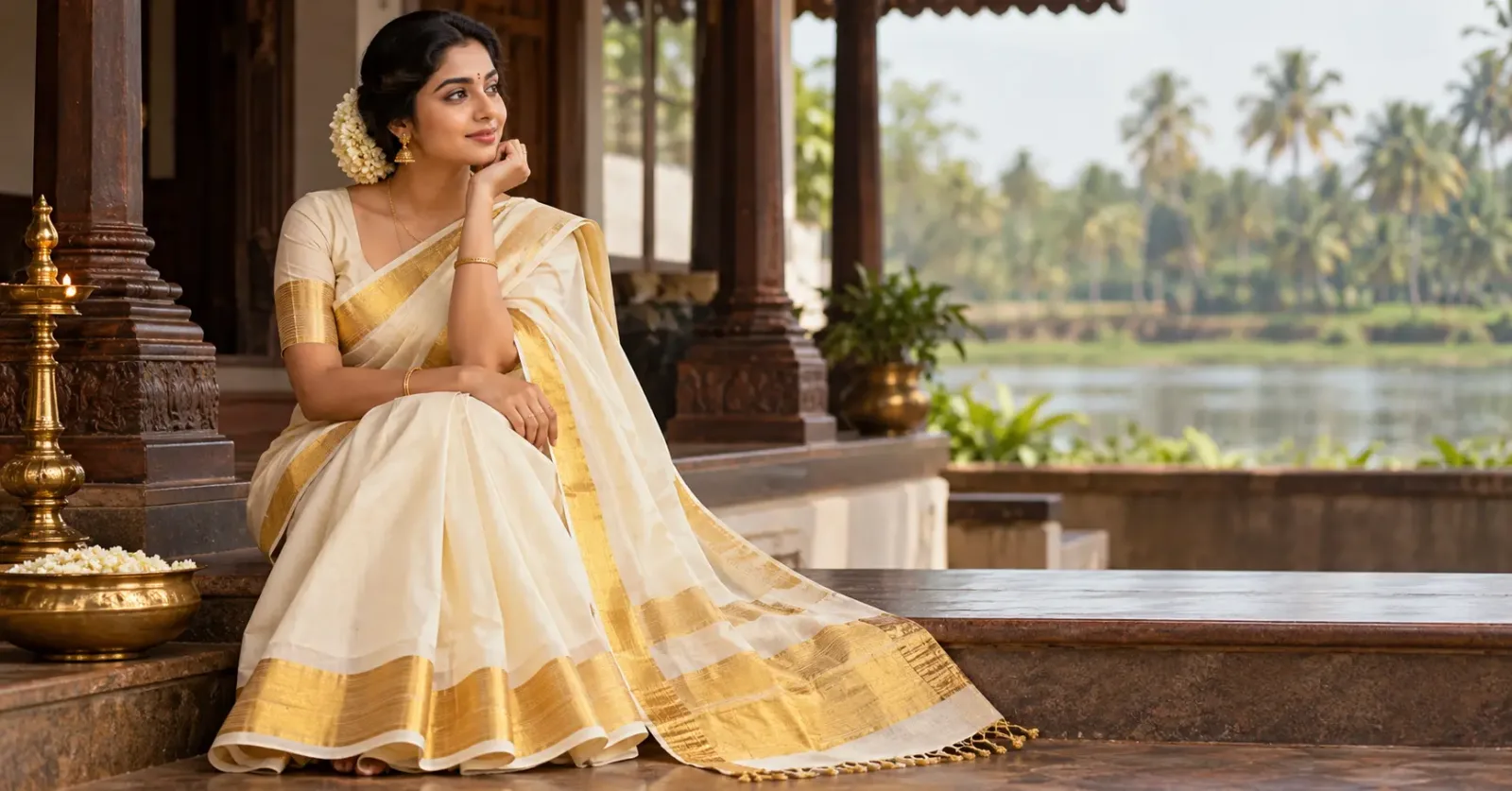
The first time I held a handloom kasavu saree, what surprised me was the weight of the border, not its colour. The ivory body felt almost weightless while the golden edge had a quiet stiffness to it.
That contrast is why the Kerala kasavu saree has stayed popular through Onam, Vishu, weddings and temple visits. It looks simple from a distance and rewards a closer look. This guide covers where it comes from, how to buy a real one, how to style it, and how to keep it looking good for decades.
What Is a Kasavu Saree?
A kasavu saree is a Kerala handloom saree woven in off-white or ivory cotton or silk, finished with a golden zari border called kasavu. The word “kasavu” refers to the zari thread itself. Its plain body and metallic edge make it the standard festive and ceremonial wear across Kerala.
History and Origin of the Kerala Kasavu Saree
Traditional Roots of Kasavu Weaving in Kerala
Kerala’s weaving centres grew around royal patronage and a humid climate that favoured light cotton. The Travancore court encouraged weavers to settle near Thiruvananthapuram, and the craft spread from there.
Early borders used real gold or silver-coated thread. That is why a kasavu border was once a sign of status, not just decoration.
How Kasavu Sarees Evolved Over Time
The change I notice most is in the zari. Pure metal thread gave way to silver-based zari, then to cheaper tested zari and copper-based yarns as costs rose.
Border widths changed too. Old pieces often have a slim, single line. Today you will find wide borders of three or four inches, double borders and full tissue bodies.
Cultural Significance of the Kasavu Saree
White stands for cleanliness and a fresh start in Kerala’s festive tradition, and gold marks prosperity. That pairing explains why families buy a new kasavu piece for Onam, a custom called onakkodi, which is the new clothing given at the festival.
It also crosses religious lines. Hindu, Christian and Muslim families in Kerala all wear it, in slightly different forms.
What Makes a Kasavu Saree Unique?
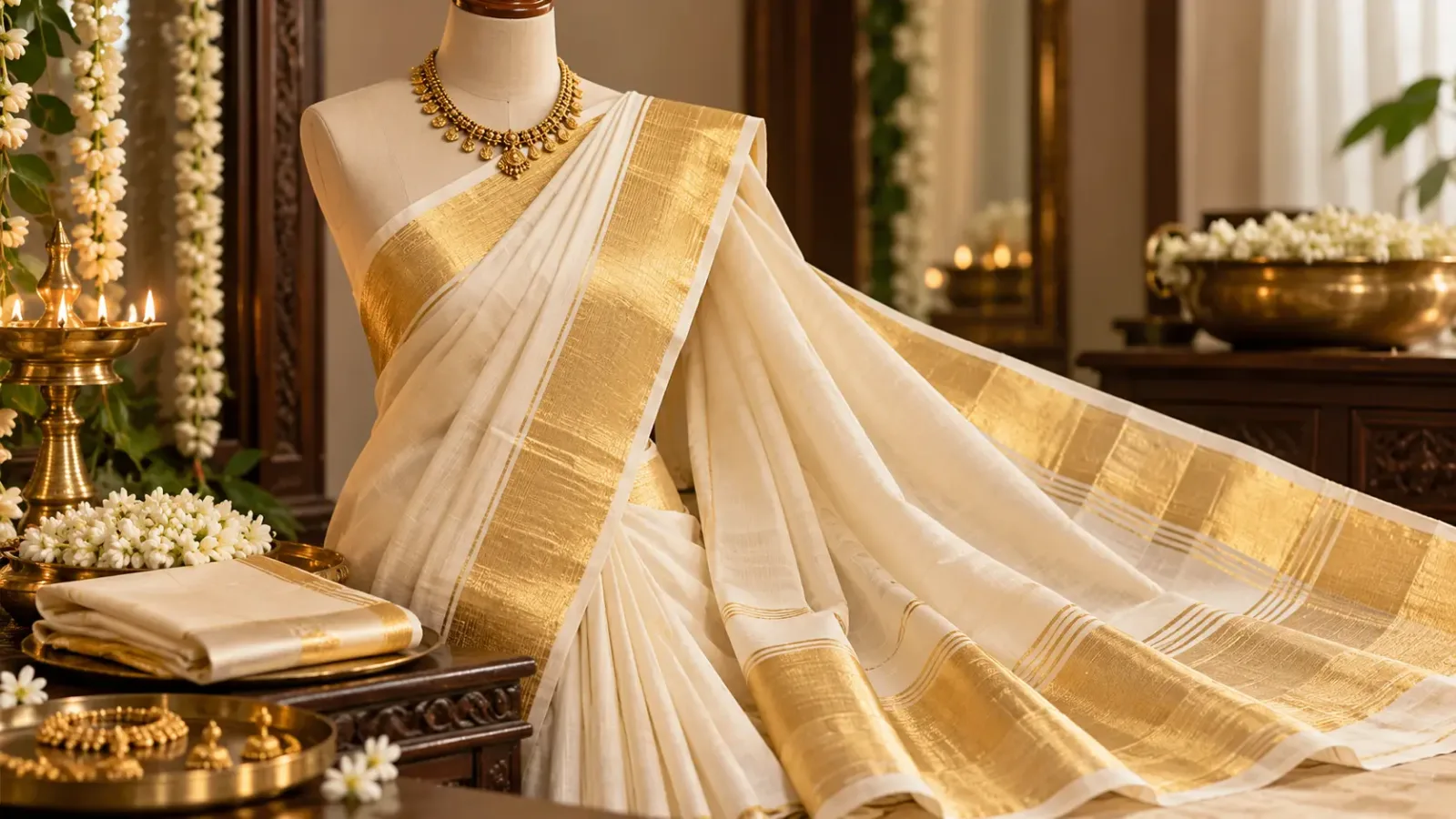
Traditional White and Off-White Fabric
Pure white is rare in handloom cotton. Most “white” pieces are natural cream or ivory, and that warmth is a good sign. Very bright, bluish white often means bleaching or an optical brightener.
Signature Golden Zari Border
The border is woven into the fabric with extra weft threads. It is not printed or stitched on, which is the single most useful fact when you are shopping.
Look at the reverse side. On a true woven border, the zari pattern shows through cleanly.
Handloom Craftsmanship and Border Patterns
A weaver at a pit loom produces a few metres a day, and a fine border piece can take far longer. Small irregularities in the weave are normal and do not signal a defect.
Border and pallu patterns usually include:
- Temple motifs: stepped, geometric lines inspired by temple architecture.
- Peacock and floral work: more common on silk and festive pieces.
- Stripes and checks: thin coloured pinstripes woven into the body.
- Pallu panels: a heavier zari section near the end of the saree, often with motifs.
Different Types of Kasavu Sarees
A quick comparison saves a lot of confusion in the shop.
| Type | Feel and Drape | Best For | Typical Care |
|---|---|---|---|
| Cotton kasavu | Soft, breathable, light starch | Daily festivals, hot weather | Gentle hand wash |
| Silk kasavu | Fluid, with a soft sheen | Weddings, evening events | Dry clean preferred |
| Tissue kasavu | Sheer, metallic shimmer | Receptions, formal functions | Dry clean, careful storage |
| Designer kasavu | Varies with fabric and motif | Modern occasions | Follow the label |
Cotton Kasavu Saree
Cotton is the everyday option and my first recommendation for newcomers. It breathes well in coastal heat and gets softer with every wash.
Check the count. A finer, tighter weave feels smoother and drapes more neatly.
Silk Kasavu Saree
Silk versions bring a subtle glow and a more formal fall. They suit brides and wedding guests who want shine without heavy embroidery.
Because they cost more, buy from sellers who can show a Silk Mark or a clear fabric declaration.
Handloom Kasavu Saree
“Handloom” describes how a saree is made, not what it is made of. A handloom saree can be cotton or silk. Powerloom sarees can look identical on a hanger, so the weaving method decides the price and the feel.
Designer Kasavu Saree
Designers add embroidery, colour gradients or painted work to the base. Many look beautiful, but the plain handloom piece is usually the better long-term buy.
If the border is only decorative print over the saree, treat it as a fashion piece, not a traditional one.
Kasavu Sarees with Contemporary Motifs
Murals, Kathakali faces, small floral clusters and coloured borders in green, maroon or black have become popular. I like these when the motif stays inside the pallu and leaves the main body quiet.
Kasavu Saree vs Mundum Neriyathum
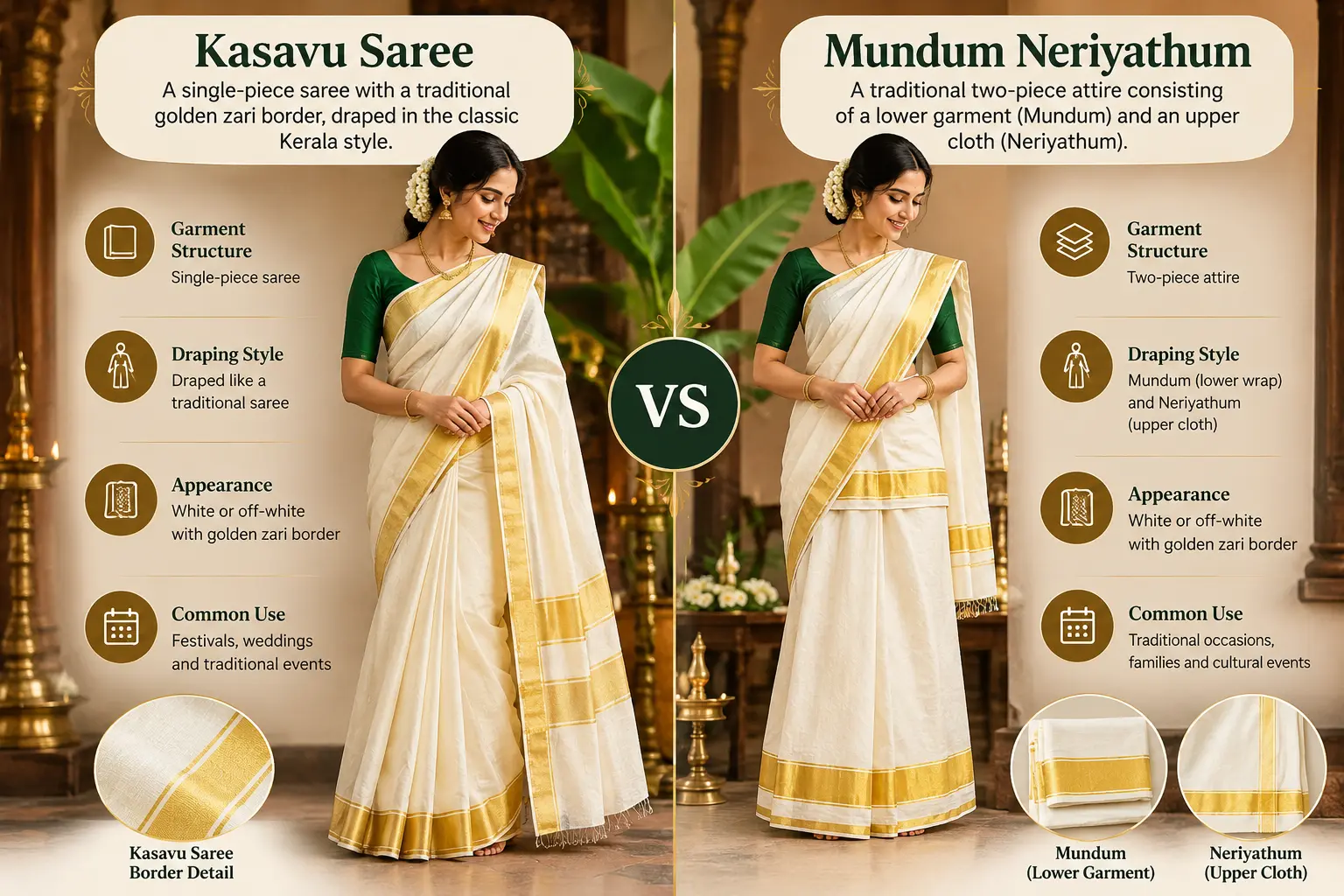
What Is Mundum Neriyathum?
Mundum neriyathum is an older two-piece garment. The mundu wraps the lower body, and the neriyathu is a separate, shorter cloth worn over the blouse and pinned or tucked at the shoulder.
Many shops now sell a “set saree” that stitches both parts into one long piece with a kasavu border. That is where most buyers get confused.
Differences in Fabric, Structure and Draping
| Feature | Kasavu Saree | Mundum Neriyathum |
|---|---|---|
| Structure | Single continuous piece | Two separate pieces |
| Draping | Pleated front, pallu over shoulder | Mundu pleated and tucked, neriyathu over the blouse |
| Typical length | About 5.5 to 6 metres | Mundu plus a shorter shoulder cloth |
| Cultural use | Festivals, weddings, temple visits | Strongly traditional, ritual and ceremonial wear |
Traditional Uses and Occasions
Elder women and ceremonial settings often favour the two-piece form. Younger wearers tend to pick the single saree for easier draping and quicker dressing.
When Are Kasavu Sarees Traditionally Worn?
Kasavu Saree for Onam
Onam falls in the Malayalam month of Chingam, usually August to September. Most families wear new kasavu clothes on Thiruvonam day.
Cotton in ivory with a gold border remains the default. Buy early, since good handloom pieces sell out before the festival week.
Kasavu Saree for Vishu
Vishu, the Malayali new year in April, uses the same palette. It is often paired with the vishukkani, the auspicious first sight of the day.
Kasavu Saree for Kerala Weddings
Brides in Kerala often choose a heavier silk or tissue kasavu with a wide border, matched with temple jewellery. Guests usually choose cotton or lighter silk.
Wedding sarees are often chosen with the photographer in mind. A pure white body can wash out in strong light, so ivory or a slightly warm cream photographs better.
Cultural Events and Religious Ceremonies
Temple visits, Kathakali performances and cultural programmes call for the same restrained look. In Christian families, white and gold features in the chatta and mundu tradition seen at church ceremonies.
How to Style a Kerala Kasavu Saree
Best Blouse Colors for a Kasavu Saree
The body is neutral, so the blouse does the talking. My most reliable pairings:
- Green: a classic and the most requested kasavu saree with green blouse look.
- Maroon and red: warm and festive, good for weddings.
- Black: sharp and modern, especially with a wide border.
- Mustard and peacock blue: these work well when the pallu has coloured motifs.
- Gold or cream: safe, elegant and effortless.
A contrast blouse in a plain fabric works better than a heavily embroidered one, since the border already carries the shine.
Traditional Jewelry and Accessories
Kerala temple jewellery fits naturally. Typical pieces include a palakka mala, a kasu mala of coin pendants, and gold jhumkas. Keep it to one statement necklace so the saree does not look crowded.
Hairstyles for a Classic Kerala Look
A neat braid or low bun with a string of jasmine is the traditional choice. It keeps the neckline clean and the pallu in view.
Makeup and Footwear to Complete the Outfit
Soft, natural makeup with a small bindi suits the look. Flat sandals or low-heel kolhapuris are practical when you will be standing through a long sadya or ceremony.
Modern Styling Ideas for Kasavu Sarees
I have seen kasavu worn with a belt over the pallu, with a crop blouse, and even with a cape-style jacket. These work if the saree itself stays simple. Avoid mixing a new trend with heavy jewellery in the same outfit.
How to Identify an Authentic Kasavu Saree
Handloom vs Powerloom Kasavu Sarees
Handloom pieces have slightly uneven selvedges, a soft hand and a visible warp-and-weft texture. Powerloom pieces look uniform, almost too perfect, and often feel stiff.
Understanding Zari Quality
Real zari keeps a warm, muted gold and develops a gentle patina with age. Cheap metallic thread looks bright yellow, can flake and feels plasticky.
Ask the seller what the zari is made of. A good seller will answer straight away: pure, tested or imitation.
Checking Fabric and Weaving Quality
Hold the saree up to a window. An even weave with consistent thread thickness suggests careful work, and clumps or thin patches suggest rushed weaving.
Check that the border does not pucker. Rubbing the fabric between your fingers should leave no powdery feel.
Authenticity Labels and Handloom Certifications
Look for the India Handloom Mark and the Silk Mark for silk pieces. Balaramapuram, Kuthampully and Chendamangalam sarees also carry Geographical Indication status, which helps protect their origin.
A tag is a useful clue, but confirm it with the weave itself.
Famous Kasavu Weaving Centers in Kerala
Balaramapuram Handloom Tradition
Near Thiruvananthapuram, Balaramapuram is known for fine, light cotton and slim, elegant borders. It is the first place I suggest for a classic Onam saree.
Kuthampully Traditional Weaving
In Palakkad district, Kuthampully weavers produce both cotton and silk, with distinctive broad borders and pallu work. It is a good source for wedding-grade pieces.
Chendamangalam Handloom Heritage
In Ernakulam district, Chendamangalam gained wider attention after the 2018 floods, when its weavers were supported through a community recovery effort. The cloth is crisp and carries a clean, balanced border.
How to Care for a Kasavu Saree
Washing Cotton and Silk Kasavu Sarees
For cotton, a cold water soak with mild liquid detergent works. Do not scrub the border.
For silk or tissue, dry cleaning is the safer route. First wash of any new cotton piece should be done separately, since some dye bleeds slightly.
How to Protect the Golden Zari Border
Zari fears three things: moisture, perfume and friction. Apply perfume before you drape, not after, and avoid rough surfaces when sitting.
Dry in shade and never wring the border. Iron on the reverse, on a low setting, with a thin cloth in between.
Proper Storage and Maintenance
Wrap it in soft muslin, not plastic, and store it away from damp walls. Refold along different lines every few months to prevent permanent creases and fabric splitting at the folds.
Add neem leaves or a silica packet, not mothballs placed directly on the cloth.
Frequently Asked Questions About Kasavu Sarees
Can I wear a kasavu saree to the office or a casual event?
Yes. A cotton piece with a slim border looks refined at work, especially in a muted blouse.
How much does an authentic handloom kasavu saree cost?
Prices vary by region and zari. In my experience, a good plain cotton piece costs a few thousand rupees, while silk and tissue pieces cost noticeably more. Treat unusually low prices with caution.
Does kasavu zari turn black over time?
Silver-based zari can darken with moisture and air. Store it dry and clean the border gently with a soft cloth.
What does a “kara” saree mean compared with kasavu?
Kara refers to a coloured border, while kasavu refers to a gold zari border. Both can appear on the same ivory base.
Is a kasavu saree comfortable in hot weather?
Cotton is, because the open weave allows air to move. Silk and tissue feel warmer, so choose accordingly for outdoor events.
Can I wear a kasavu saree to a church wedding?
Yes. White and gold is widely worn in Kerala Christian ceremonies, so it is both appropriate and traditional.
How do I stop the pallu from slipping when I drape it?
Use a small safety pin at the shoulder and keep the pleats tucked firmly at the waist. Slightly starched cotton holds its shape better.
Conclusion
The kasavu saree has lasted because it asks for very little and gives a lot back. A plain ivory body, a woven gold edge and the work of Kerala’s weavers add up to a garment that suits a festival morning as well as a wedding hall.
If you are buying your first Kerala kasavu saree, start with a handloom cotton from a known weaving centre, check the border from the reverse side, and care for it gently. Done right, it will outlast most things in your wardrobe.
Must Visit to Related Pages:

Alliance Editorial Team
Our in-house team of wedding writers and editors.