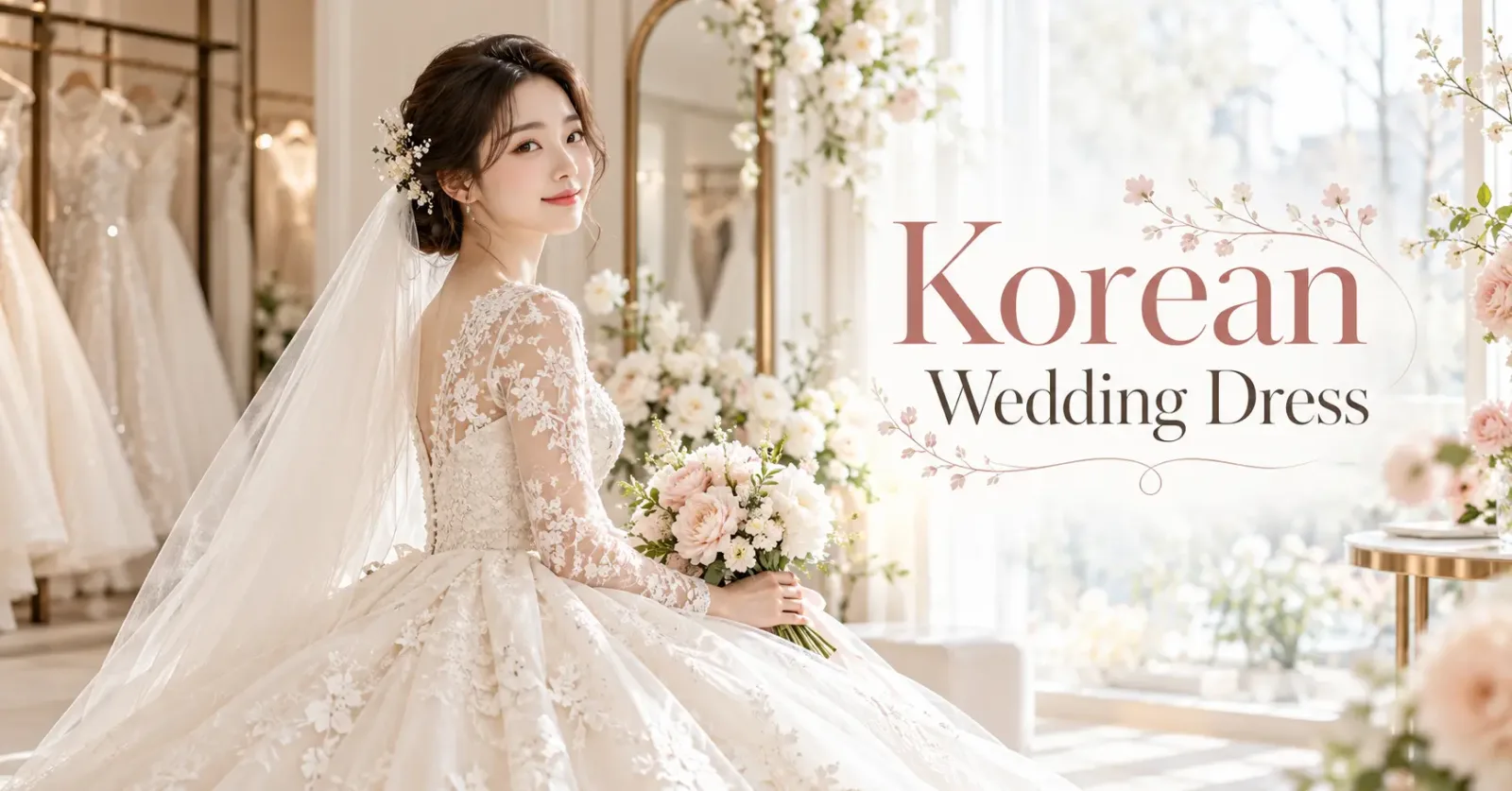
A Korean wedding dress is a bridal gown shaped by Korean fashion's love of clean lines, soft fabrics and quiet romance, or, in the traditional sense, a ceremonial hanbok such as the hwarot or wonsam worn for Korea's historic wedding rites. Today most Korean brides wear both: a white, minimalist or lace gown for the ceremony and photos, and a colorful hanbok for the family-centered paebaek ritual.
Whether you are planning your own wedding, researching Korean culture, or collecting inspiration from K-drama weddings and Seoul bridal studios, this guide explains the styles, the meaning behind traditional attire, how to choose a gown, what accessories complete the look, and where to buy or rent safely.
What Is a Korean Wedding Dress?
The phrase "Korean wedding dress" refers to two related things:
- Modern Korean bridal gowns: Western-style white dresses with a distinctly Korean aesthetic. They tend to be elegant, understated and flattering, with satin, tulle, lace and sheer sleeves.
- Traditional Korean wedding attire: Ceremonial garments rooted in the Joseon era, including the wedding hanbok, the hwarot (bridal robe) and the wonsam (formal ceremonial robe).
Most contemporary Korean weddings blend both traditions in a single day.
What Makes Korean Wedding Dresses Unique?
Korean bridal fashion is recognizable even without a label. The look favors refinement over drama, with attention paid to how a dress photographs, moves and feels on the body.
Minimalist Designs and Elegant Silhouettes
Korean gowns often focus on structure and proportion rather than heavy embellishment. Typical features include:
- Clean necklines such as square, sweetheart, straight or softly draped off-the-shoulder cuts
- Fitted bodices that define the waist without looking stiff
- Smooth, flowing skirts with subtle volume
- Neutral shades such as ivory, soft white and champagne
This restraint is deliberate. The dress is meant to highlight the bride's features, hair and makeup rather than compete with them.
Delicate Fabrics and Romantic Details
Fabric is central to the Korean wedding dress. Brides commonly choose:
- Mikado and satin for sculpted, glossy minimalism
- Chiffon and organza for light, airy skirts
- Tulle for soft princess volume
- Lace and floral appliqué for a romantic, vintage feel
Romantic details are usually small and precise: sheer illusion backs, pearl buttons, tiny bows, ribbon sashes and delicate beadwork rather than heavy crystals.
The Influence of Korean Bridal Fashion
Seoul's wedding industry, K-drama weddings and celebrity ceremonies have made Korean bridal trends popular worldwide. Pre-wedding photo shoots, where couples wear several outfits in a studio or outdoor location, have also pushed designers to create gowns that look beautiful in photographs. Soft lighting, clean backdrops and flattering, lightweight fabrics are part of the style's global appeal.
Popular Modern Korean Wedding Dress Styles
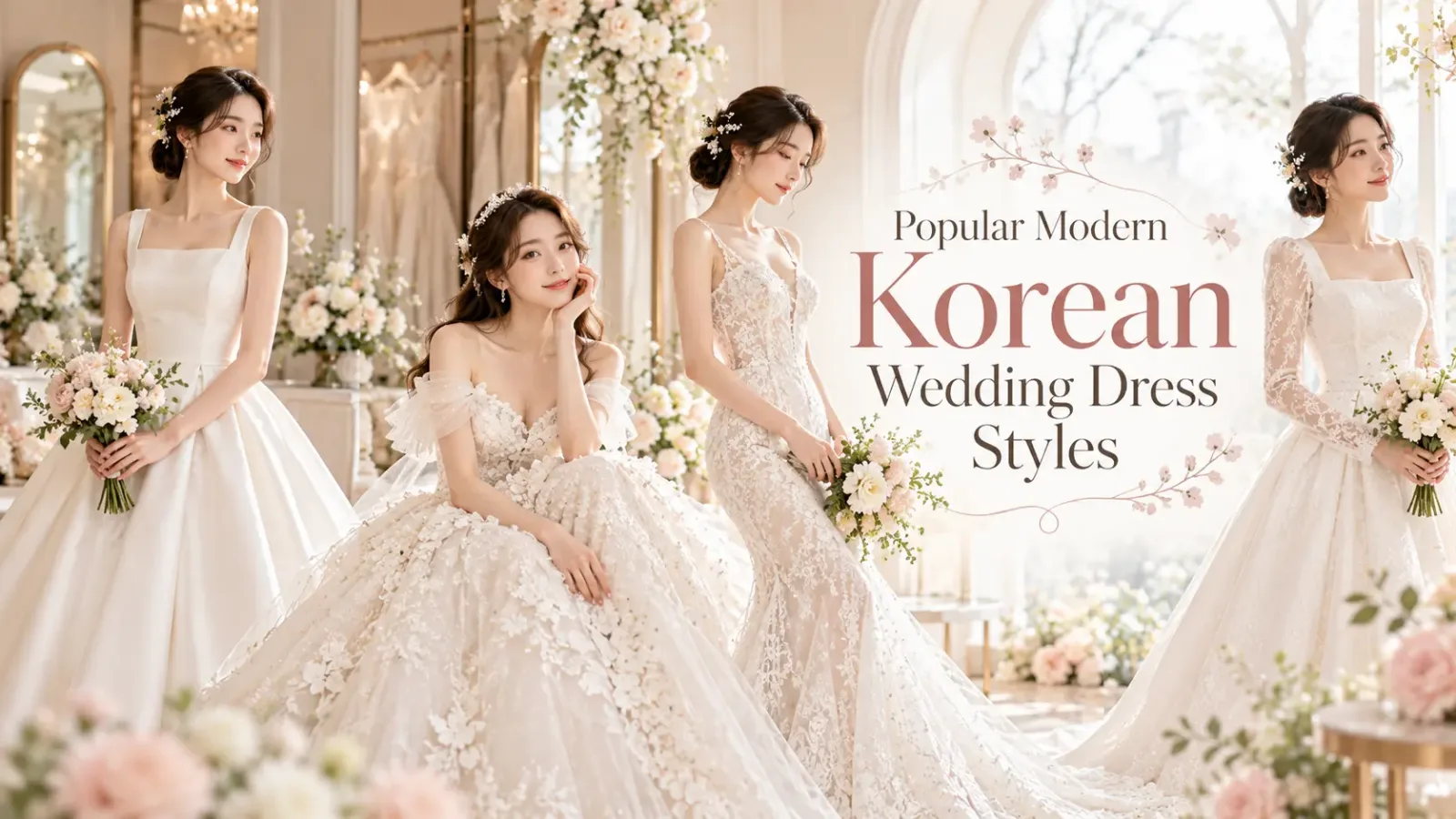
Below are the most searched and most worn silhouettes in contemporary Korean bridal fashion.
Minimalist Satin Korean Wedding Dresses
Satin gowns are a favorite for brides who want a sleek, modern look. They usually feature a simple bodice, a smooth skirt and very little decoration. The beauty lies in the fit and the drape of the fabric. They suit city weddings, hotel ballrooms and brides who prefer a timeless, editorial feel.
Korean Lace Wedding Dresses
Lace dresses bring softness and femininity. Korean designs often use fine floral lace, sometimes layered over a plain base so the pattern looks light rather than heavy. They work well for garden weddings, church ceremonies and vintage-inspired themes.
Princess-Style Korean Wedding Gowns
Ball gowns with fitted bodices and layered tulle skirts remain very popular, especially for studio photo shoots and formal wedding halls. The Korean take is often cleaner than a classic fairytale gown, with fewer sequins and more subtle shine, delicate sleeves or a gentle train.
Long-Sleeve Korean Bridal Dresses
Sheer or lace long sleeves offer elegance and coverage, which makes them useful for modest ceremonies, religious venues and cooler months. Many designs pair sleeves with high or boat necklines and sheer shoulders for a graceful, refined look.
Off-Shoulder Korean Wedding Dresses
Off-shoulder necklines highlight the collarbones and shoulders, a feature widely admired in Korean beauty culture. They can be structured in satin or soft in tulle and ruffles, and they pair well with updos and delicate necklaces.
A-Line and Mermaid Korean Bridal Gowns
- A-line gowns are the most versatile. They flatter nearly every body type, are comfortable to walk and dance in, and suit both simple and detailed fabrics.
- Mermaid and fit-and-flare gowns emphasize the figure. They look dramatic in photos but need careful fitting and are less forgiving for movement and long events.
Traditional Korean Wedding Dresses and Their Cultural Meaning
Traditional Korean wedding attire reflects centuries of history, class distinctions and symbolism. Even brides who choose a white gown often wear traditional clothing during part of the day.
Korean Wedding Hanbok
The hanbok is Korea's national dress. Its core pieces for women are the jeogori (a short jacket) and the chima (a full, high-waisted skirt). A wedding hanbok is made in richer fabrics and brighter colors than everyday versions and is often decorated with embroidery. Today, brides and grooms frequently wear hanbok for family greetings and the paebaek ceremony.
Hwarot: Traditional Korean Bridal Robe
The hwarot is a ceremonial bridal robe from the Joseon period. It is usually made from silk in vivid colors such as red or green and covered in embroidery of auspicious symbols. Historically it was associated with royal and noble women, but common brides were later allowed to wear it for the wedding day as a special privilege. It is worn over a jeogori and chima and tied with a long ribbon.
Wonsam: Ceremonial Wedding Attire
The wonsam is another formal ceremonial robe, traditionally worn by women of higher status. It has wide, long sleeves and is typically richly embroidered, often with gold thread. Like the hwarot, it is worn over the hanbok and is rarely seen outside weddings, cultural events, museums and historical dramas.
Traditional Colors and Symbolic Embroidery
Color and pattern carry meaning in Korean wedding attire:
- Red: good fortune, passion and protection from bad luck
- Blue: harmony and the groom's side in the traditional color pairing of red and blue
- Green and yellow: colors that appear in bridal robes and linings, linked to growth and balance
- Peonies: wealth and honor
- Lotus flowers: purity
- Cranes and phoenixes: longevity and marital harmony
- Butterflies and mandarin ducks: happiness and lifelong fidelity
These motifs express blessings for the couple's marriage, children and long life together.
Modern Korean Wedding Dress vs. Traditional Hanbok
Both outfits matter at a Korean wedding, but they serve different purposes.
Differences in Design and Silhouette
A modern gown follows Western bridal tailoring, with a fitted bodice, defined waist and skirt shapes such as A-line, ball gown or mermaid. A hanbok has a short jacket and a high-waisted, voluminous skirt that falls from just under the chest, creating a rounded, flowing line. Traditional robes add layers and wide sleeves.
Fabrics, Colors, and Accessories
Modern dresses use satin, tulle, lace and chiffon in white or ivory, with minimal jewelry, veils and delicate hair pieces. Wedding hanbok uses silk and similar fabrics in bold colors and gold-embroidered patterns, with traditional accessories such as a jokduri, binyeo and ribbons.
Cultural and Ceremonial Uses
The white gown is worn for the main ceremony, portraits and often the reception. The hanbok is worn for formal family greetings and the paebaek ritual, and it carries heritage and respect for elders.
Comparison Table: Modern Korean Wedding Dress vs. Hanbok
|
Feature |
Modern Korean Wedding Dress |
Wedding Hanbok |
|---|---|---|
|
Origin |
Western bridal fashion with Korean styling |
Traditional Korean dress |
|
Typical colors |
White, ivory, champagne |
Red, green, yellow, blue, pink and other bold colors |
|
Silhouette |
Fitted bodice, A-line, ball gown or mermaid |
Short jacket with high-waisted full skirt |
|
Common fabrics |
Satin, lace, tulle, chiffon |
Silk and other traditional fabrics |
|
Main use |
Ceremony, photos, reception |
Paebaek, family greetings, cultural moments |
|
Accessories |
Veil, tiara, minimal jewelry |
Jokduri, binyeo, ribbons, traditional ornaments |
|
Symbolism |
Elegance and romance |
Heritage, respect, blessings |
How to Choose the Perfect Korean Wedding Dress
Find a Silhouette That Matches Your Personal Style
Start with how you want to feel. If you prefer a clean, modern look, try satin A-line or minimalist gowns. If you love romance, explore lace, sheer sleeves and soft tulle. Try on two or three very different shapes before deciding, because a dress that looks perfect online may not suit your proportions.
Consider Your Wedding Venue and Theme
Match the dress to the setting:
- Hotel ballroom or wedding hall: structured satin, ball gowns, chapel trains
- Garden or outdoor: lightweight chiffon, lace, shorter trains
- Church or religious venue: long sleeves, higher necklines
- Beach or destination: airy A-lines in soft fabrics
Select Fabrics Based on the Season
Choose breathable chiffon or organza for summer weddings. For colder months, consider heavier satin, mikado or long lace sleeves. Humidity and heat can quickly make heavy tulle uncomfortable, so think about the weather on your wedding day.
Prioritize Comfort, Fit, and Alterations
Sit, walk, hug and dance in the dress during a fitting. Check that you can breathe comfortably and lift your arms. Plan for professional alterations, since small changes in the waist, hem and straps often make the biggest difference to the final look.
Korean Bridal Accessories That Complete the Look
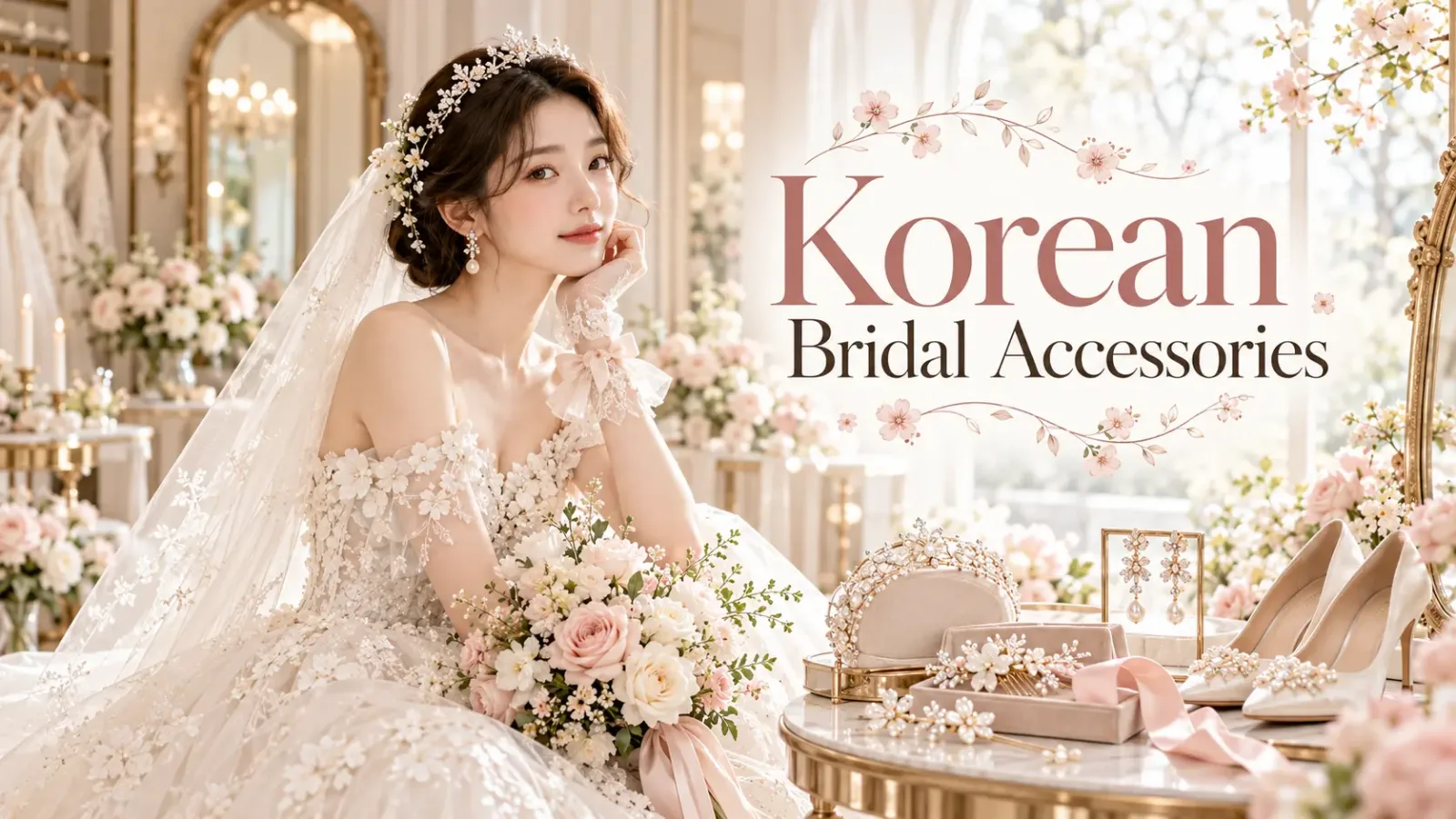
Bridal Veils and Hair Accessories
Korean brides often favor soft, simple veils, short or cathedral length, with fine edges. Hair accessories include pearl pins, floral combs, ribbons, small tiaras and delicate headbands. Hairstyles are often loose waves, elegant low buns or half-up styles.
Minimalist Jewelry and Wedding Shoes
Jewelry is usually subtle: pearl or small crystal earrings and a thin necklace. Because the gown is the focus, statement pieces are used sparingly. Shoes are typically white or ivory pumps or flats, with comfort prioritized for long photo sessions and receptions.
Traditional Korean Bridal Headpieces
With a hanbok, brides wear traditional hair ornaments:
- Jokduri: a small crown-like headpiece, often decorated with beads and gems
- Binyeo: a long decorative hairpin
- Daenggi: a ribbon or braid decoration
- Yeonji gonji: small red dots painted on the cheeks and forehead in traditional ceremonies, symbolizing good fortune and protection
When Do Korean Brides Wear Different Wedding Outfits?
A Korean wedding day often includes more than one outfit, each tied to a specific moment.
Wedding Ceremony Attire
Most modern ceremonies take place in a wedding hall, hotel or venue, and the bride wears a white gown while the groom wears a suit or tuxedo. This is the look seen in most wedding photos.
Reception Dress Changes
Brides may change into a second dress, such as a shorter cocktail gown or a colored dress, for the reception, meal or greetings with guests. Because Korean ceremonies are often short and tightly scheduled, outfit changes are planned carefully.
Traditional Paebaek Ceremony Outfits
The paebaek is a traditional ritual in which the couple formally greets the groom's parents and relatives. They wear hanbok, bow deeply, and offer food and drink. The parents often give the couple jujubes (dates) and chestnuts, symbolizing children, and sometimes offer advice and blessings. For many families, this ritual is the most meaningful moment of the day.
Where to Buy Korean Wedding Dresses
Korean Bridal Designers and Boutiques
Seoul is known for its bridal districts and boutiques, especially in upscale neighborhoods where many studios offer complete packages. Designers there tend to focus on elegant, modern and photogenic gowns. Appointments are common, so book ahead and bring reference photos.
Online Korean Wedding Dress Stores
Online shops offer a wide range of Korean-inspired gowns, often at lower prices. Compare reviews, real customer photos, return policies and size charts carefully, especially if the store ships internationally.
Custom-Made and Rental Wedding Dresses
- Custom-made: the best fit and design control, but it requires more time and budget.
- Rental: very common in Korea and ideal for photo shoots or brides who do not want to keep the dress.
- Hanbok rental: usually the most practical option for the paebaek, since many shops rent complete sets with accessories.
What to Check Before Ordering Internationally
Before buying from overseas, confirm:
- Size conversion and detailed measurements
- Fabric composition and lining
- Production time and shipping time
- Customs duties and taxes
- Return, exchange and alteration policies
- Real customer photos and independent reviews
Common Mistakes to Avoid When Buying a Korean Wedding Dress
Choosing Appearance Over Comfort
A beautiful dress that restricts movement or breathing will affect your experience. Test the gown in a seated position and while walking.
Ordering Without Checking Measurements
Sizes vary between brands and countries. Always use the designer's size chart and measure your bust, waist, hips and height accurately, then ask for confirmation if you are unsure.
Ignoring Delivery and Alteration Timelines
Custom orders, international shipping and alterations can take weeks or months. Allow extra time so you are not rushed or forced to accept a poor fit.
Confusing Traditional Hanbok With Modern Bridal Gowns
A hanbok is not simply a Korean version of a wedding gown. It has its own history, structure and etiquette. Understand which outfit suits which part of the day, and respect the cultural meaning when wearing traditional garments.
Frequently Asked Questions About Korean Wedding Dresses
What is a Korean wedding dress called?
There is no single name. Modern white gowns are usually called wedding dresses, while traditional wedding attire is called hanbok, and the ceremonial robes are hwarot and wonsam.
Do Korean brides wear white wedding dresses?
Yes. White or ivory gowns are standard for most modern ceremonies and photos. Brides also wear a colorful hanbok for traditional parts of the day.
What is the difference between a Hanbok and a wedding gown?
A wedding gown follows Western bridal tailoring and is mostly white, while a hanbok is traditional Korean clothing with a short jacket and high-waisted skirt in vibrant colors. The gown is for the main ceremony, and the hanbok is for traditional rituals and family greetings.
Can foreigners wear Korean wedding dresses?
Yes. Korean bridal gowns are sold and rented to international customers, and many tourists wear hanbok in Seoul. If wearing traditional garments, approach them with respect and learn how they are meant to be worn.
Are Korean wedding dresses expensive?
Prices vary widely. Rentals and online dresses are generally more affordable, while custom designer gowns and full studio packages cost more. Fabric, brand, fittings and alterations all affect the final price.
Can you rent a Korean wedding dress?
Yes. Renting is common in Korea for both wedding gowns and hanbok, and many studios include dress rental in their wedding or photo packages.
What colors are traditional Korean wedding dresses?
Traditional wedding attire often uses red, green, yellow, blue and pink, with gold embroidery. Red and green are especially associated with bridal robes such as the hwarot, and each color carries symbolism of luck, harmony and prosperity.
Conclusion: Finding Your Perfect Korean Wedding Dress
A Korean wedding dress can mean a sleek satin gown, a romantic lace design or a richly embroidered hanbok, and many brides wear all of them. The best choice depends on your personal style, venue, season and how much cultural tradition you want to include.
Start by deciding which moments of your wedding need which outfit, explore silhouettes that match your comfort and proportions, check fabrics and measurements carefully, and leave plenty of time for fittings and shipping. With thoughtful planning, you can create a bridal look that is elegant, meaningful and entirely your own.
Must Visit to Related Pages:
Alliance Editorial Team
Our in-house team of wedding writers and editors.