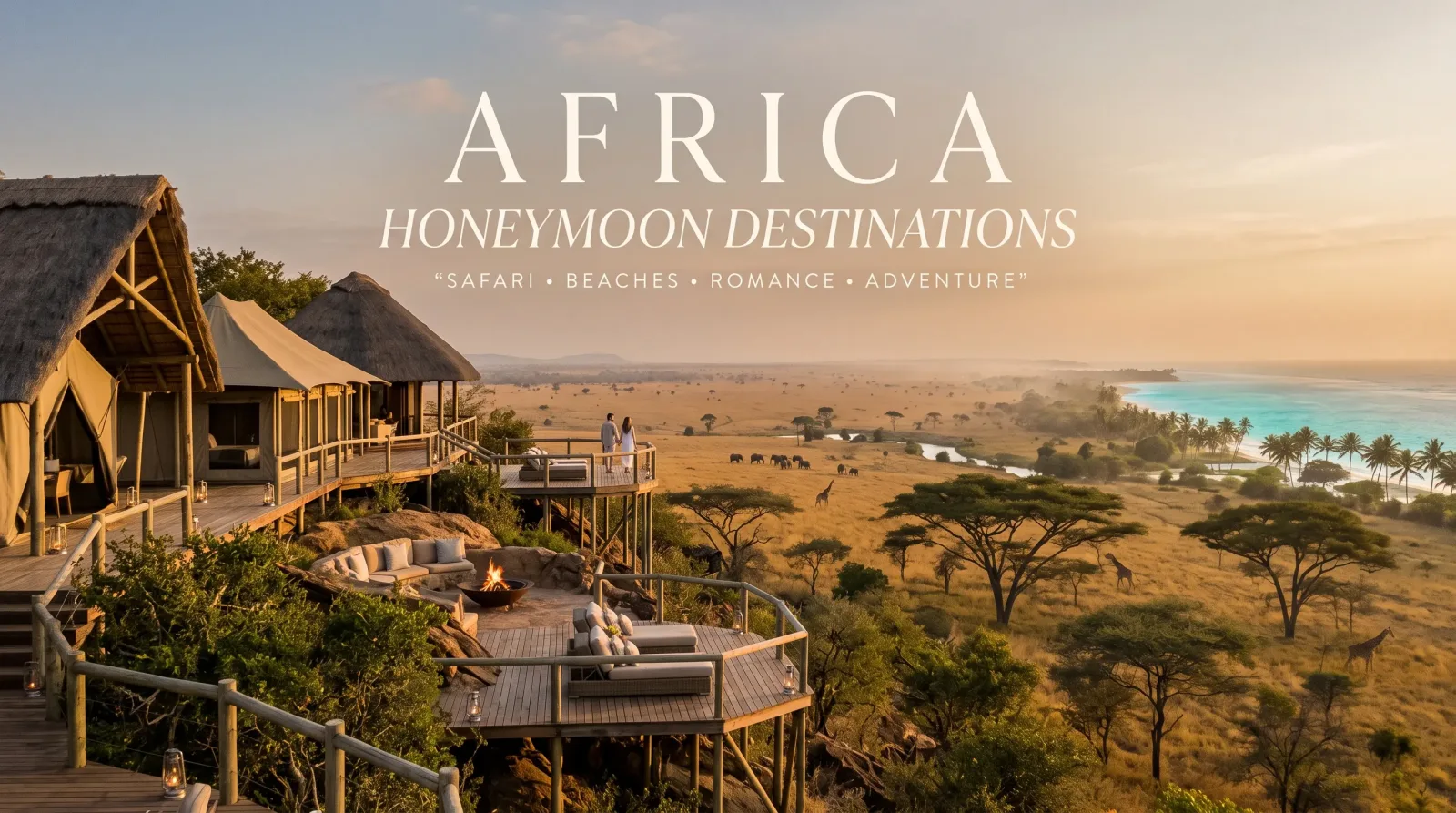
The best Africa honeymoon destinations for most couples are South Africa for variety and easy logistics, Tanzania or Kenya for classic safari with a Zanzibar or Diani beach finish, and Mauritius or the Seychelles for pure island time. Botswana, Namibia and Rwanda suit couples who want something rarer. A safari first and a beach second works best for most couples.
Match the Destination to Your Couple Type
Most guides rank countries. I'd start with how you two behave on holiday.
- Planners who like a full day: South Africa. Cape Town, wine country and a private reserve fit in ten nights without exhausting you.
- Wildlife obsessives: Tanzania's Serengeti or Kenya's Mara conservancies.
- Light sleepers who want proper walls: South African lodges, which usually offer solid rooms rather than canvas.
- Couples who want few other people around: Botswana's Okavango Delta or a Kenyan conservancy.
- Couples who want a story nobody else has: Rwanda or Uganda for gorillas, or Namibia's dunes.
- Couples who want to do almost nothing: Mauritius, Seychelles or a Mozambican island.
If you disagree, split the trip. One stop for her game drives, one for his sunloungers.
Africa Honeymoon Destinations at a Glance
| Destination | Best for | Malaria | Cost feel | Minimum days |
|---|---|---|---|---|
| South Africa | Variety, food, wine, Big Five | Kruger area yes; Madikwe and Eastern Cape no | $$ to $$$ | 8 to 10 |
| Tanzania | Serengeti, migration, Zanzibar | Yes | $$$ | 9 to 12 |
| Kenya | Mara conservancies, Diani or Lamu | Yes | $$ to $$$ | 7 to 10 |
| Botswana | Water safaris, privacy | Yes | $$$$ | 6 to 8 |
| Namibia | Landscapes, self-drive | Low in south, seasonal in Etosha | $$ | 10 to 14 |
| Rwanda / Uganda | Gorilla trekking | Yes | $$$ (permit-driven) | 4 to 6 |
| Mauritius | Resort stay, spa | No | $$ to $$$$ | 5 to 7 |
| Seychelles | Island scenery | No | $$$ to $$$$ | 5 to 8 |
| Zanzibar | Beach plus culture | Yes | $ to $$$$ | 4 to 7 |
| Mozambique islands | Quiet, private beaches | Yes | $$$ to $$$$ | 4 to 6 |
East Africa: Kenya, Tanzania and the Gorillas
Kenya: Choose the Conservancy, Not Just the Mara
The Masai Mara is the headline, but where you sleep matters more than which reserve you name. Private conservancies around the Mara limit vehicle numbers and typically allow night drives and walking. The main national reserve usually does not, so sightings can draw a crowd.
For a quieter side, add a northern stop such as Laikipia or Samburu. Then finish at Diani Beach or Lamu. Lamu is slower and more Swahili in feel.
Tanzania: The Northern Circuit and the Timing Trap
Most Tanzanian honeymoons follow the Northern Circuit: Tarangire, Lake Manyara, Serengeti and Ngorongoro Crater. Where the herds are depends on the month, so ask your operator where the camp sits relative to them, not just which park it is in. A camp in the wrong part of the Serengeti in the wrong month can mean long drives to find the action.
Tanzania pairs naturally with Zanzibar. Fly-in connections from the Serengeti make the swap quick.
Rwanda and Uganda: Gorilla Trekking
A gorilla trek is the most emotional single day many couples will have. Rwanda's permit costs $1,500 and Uganda's costs $800, and the permit is the biggest fixed cost in the trip. Check the current Uganda tariff before budgeting, because its published pricing period ran only to mid-2026.
Treks can last anywhere from 90 minutes to six hours, permits are limited, and booking three to six months ahead is advised. You must be at least 15, which matters if you're travelling with a younger family member. Be honest with your operator about fitness, because it decides which gorilla family you're assigned.
Southern Africa: South Africa, Botswana, Namibia and Victoria Falls
South Africa: Where the Safari Type Drives the Budget
"Kruger safari" means three different trips. Public Kruger gates are open to anyone with a permit, so several vehicles can crowd one sighting. Private reserves such as Sabi Sands and Timbavati share unfenced boundaries with Kruger but cap vehicles at sightings and allow off-road driving.
The third option is malaria-free. Madikwe, Pilanesberg and Eastern Cape reserves sit outside the malaria zone, which matters if you'd rather skip tablets or might be trying for a baby.
In Cape Town, here's the surprise: the Atlantic beaches at Camps Bay and Clifton are photogenic but cold all year. Warm swimming water is on the Indian Ocean side, near Durban. Plan the Cape for wine, mountains and food, not for swimming.
Botswana: Water Safaris Run on a Flood Calendar
The Okavango Delta is fed by rain far away in Angola. The flood arrives months after the rains, so the Delta is at its fullest around June to August, when the surrounding land is dry. That timing is why mokoro (dugout canoe) trips and boat safaris are best in the dry season.
Botswana's model is low-volume and high-price. A short, well-chosen stay beats a long, thin one.
Namibia: For Couples Who Like Driving and Space
Sossusvlei's dunes at sunrise are the visual highlight, with Etosha for wildlife and the Skeleton Coast for isolation. Most couples self-drive or use a private driver-guide. Distances are huge and many roads are gravel, so plan fewer stops than you think you need.
Victoria Falls: Timing Changes What You See
At peak flow, roughly February to May, spray can hide the view from the Zimbabwe side. At low water, around September to December, you can reach Devil's Pool on the Zambian side. Pick the month based on whether you want thunder or access.
The Beach Finish: Zanzibar, Mauritius, Seychelles, Mozambique
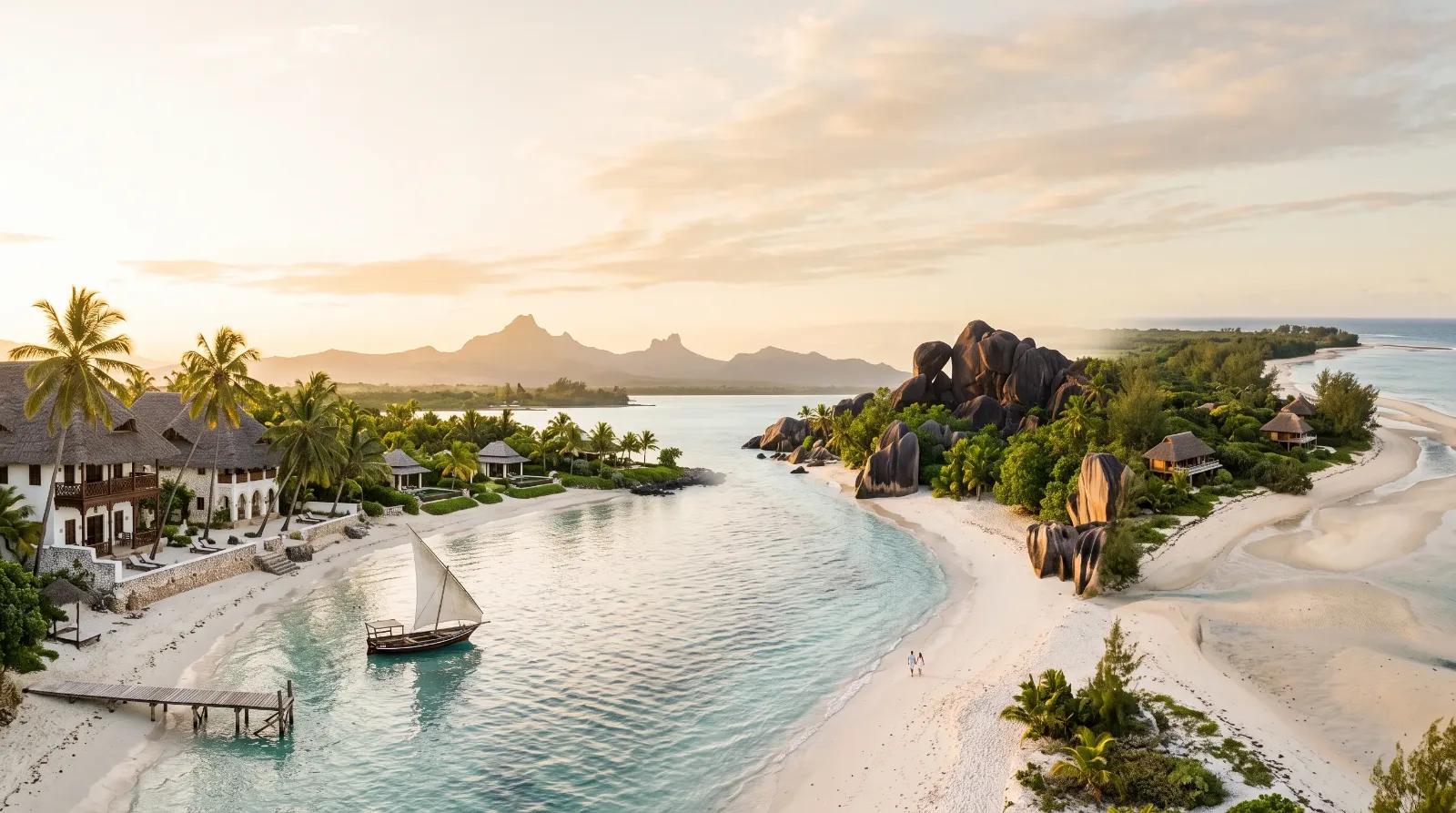
Zanzibar has a wide price range and real culture in Stone Town, but tides matter. On the east coast near Paje and Jambiani the sea can retreat far at low tide. The north coast around Nungwi and Kendwa is easier for swimming at any hour.
Mauritius is reliable resort luxury, with calm lagoons and a malaria-free stay. Cyclone risk runs roughly January to March, so avoid those months.
Seychelles has the most dramatic beach scenery, with granite boulders and white sand. It's pricey, but guesthouses on Praslin and La Digue bring costs down a lot.
Mozambique's Bazaruto and Benguerra islands are the quiet option. They connect well to a Kruger safari via Johannesburg, and the privacy is hard to match.
Best Time for an Africa Honeymoon, Month by Month
| Months | Strongest choices | Think twice about |
|---|---|---|
| Jan to Feb | Southern Serengeti calving, Cape Town summer, Falls building | Mauritius (cyclone risk) |
| Mar to May | Green-season deals in East Africa, Falls at full flow, Cape Town early autumn | Zanzibar beaches (heavy rain) |
| Jun to Aug | Dry-season safari, Okavango flood peak, Zanzibar | Cape Town (cold, wet) |
| Sep to Oct | Mara and northern Serengeti herds, Kruger game viewing, Devil's Pool | Namibia midday heat |
| Nov to Dec | Baby-animal season in southern Africa, Cape Town summer, Zanzibar in December | East Africa short rains in November |
What an Africa Honeymoon Really Costs
Safari nights, not flights or beaches, usually decide the total. For South Africa, one operator estimates a ten to twelve night trip at roughly $4,000 to $7,500 per person at the budget end and $8,000 to $12,500 or more at the premium end, flights included. Large operators' honeymoon listings overall span from about $1,000 to nearly $30,000 per person, so ask what's included before comparing.
If your total budget for two is around $5,000, I'd pick one country, not two. Mixing a safari and a beach across borders adds internal flights that eat the savings.
Ways to spend smarter:
- Travel in shoulder months, just before or after peak, for the same wildlife with fewer vehicles.
- Split the lodge tiers. One splurge camp, one mid-range lodge.
- Spend on the vehicle first. A private vehicle changes a safari more than a bigger room.
- Skip island hopping in the Seychelles if you're short on time.
Planning Details Most Guides Skip
Passport names. If you've just married, book flights in the name on your passport, not your new married name.
Entry rules. Kenya requires an Electronic Travel Authorization for all visitors, babies included, before travel. Apply on the official government portal, since copycat sites add fees.
Baggage. Light aircraft often limit you to soft bags around 15 to 20 kg each. Hard suitcases are often refused, so confirm with your operator.
Trip order. Safari first, beach last. Dawn starts and dusty roads are tiring, and a beach is a better place to land your flight home from.
Right after the wedding. Avoid flying the morning after. Add a night near your departure airport or a quiet first stop with a pool.
Same-sex couples. Laws differ sharply by country. South Africa, Botswana, Mauritius, Seychelles and Mozambique do not criminalise same-sex relationships, while Kenya, Tanzania (including Zanzibar), Uganda and Zambia do. Rules change, so check current official advice and tell your operator at booking.
Insurance. Make sure cover includes medical evacuation, not just hospital costs, especially for remote camps.
Tell the camp. Many lodges add a private dinner or an upgrade when they know it's a honeymoon. Mention it at booking, not on arrival.
Sample Itineraries
- Easy classic, 12 nights: Cape Town (3), Winelands (2), Sabi Sands or Madikwe (3), Mauritius (4)
- Big wildlife, 11 nights: Tarangire (2), Serengeti (4), Ngorongoro (1), Zanzibar north coast (4)
- Adventure, 14 nights: Okavango Delta (4), Victoria Falls (2), Sossusvlei (3), Cape Town (5)
- Short and private, 8 nights: Mara conservancy (4), Diani Beach (4)
- Once-only, 8 nights: Uganda or Rwanda gorillas (3), Queen Elizabeth or Akagera safari (2), lakeside rest (3)
FAQ
1. How far ahead should we book?
Nine to twelve months ahead for peak months such as July to October, and for any gorilla permits. Small camps fill first, especially in Botswana and the Mara conservancies.
2. Can we have an Africa honeymoon without a safari?
Yes. Cape Town with the Winelands, Mauritius, the Seychelles, Zanzibar and Morocco all work as safari-free honeymoons.
3. Is Africa safe for newlyweds?
Most honeymoon routes are well established. Use a reputable operator, arrange transfers instead of wandering at night in big cities, and check your government's current travel advice before you book.
4. Do we need vaccinations other than malaria prevention?
It depends on your route and where you've recently been. Yellow fever certificates can be required for some entries, so see a travel clinic six to eight weeks before you leave.
5. What if we might be trying for a baby?
Choose malaria-free destinations such as Madikwe, the Eastern Cape, Mauritius or the Seychelles, and speak to a doctor before travelling. Malaria in pregnancy is serious.
6. Will we have phone signal or Wi-Fi?
Often only in the main lodge area, and sometimes not at all in remote camps. Decide before you go whether you want to be offline.
7. How does tipping work on safari?
Most lodges have a staff tip box plus separate tips for your guide and tracker. Your operator will suggest amounts, and small US dollar notes or local currency are handy.
8. What should we pack for the early mornings?
Layers. Dawn drives are cold even in hot months, and neutral colours like khaki, olive and tan are better than bright colours or very dark blue.

Alliance Editorial Team
Our in-house team of wedding writers and editors.