Most pages answer this question in one line and then sell you a resort. Here you get the meaning, the disputed history, current data and the decisions that matter.
A honeymoon is a trip, or a stretch of private time, that newlyweds take after the wedding to rest, reconnect and mark the start of married life. The honeymoon meaning also stretches to the early happy stage of a relationship, but that is a separate idea. Most couples take one, though timing, length and style now vary widely.
Why It Is Called a Honeymoon: What the Evidence Supports
The word joins "honey" and "moon," and that part is not disputed. The popular story says couples drank honey wine (mead) for one lunar month after the wedding. Several competitors repeat it as fact, with dates as early as the fifth century.
We treat that story as folklore, because solid sources are thin. Psych Central notes that the term itself only goes back to the mid 16th century. A second theory, often cited by word historians, says "moon" hints at how love waxes and wanes, so the word carried a gentle warning that the sweetness fades.
Both theories can sit together. If you quote the mead story in your own wedding speech, say "the story goes" and you will be on safe ground.
From Bridal Tours to Mini-Moons
By the 1800s, the trip had become a "bridal tour." Wealthy couples visited relatives who missed the wedding, and sometimes a parent came along. Travel for privacy and romance grew later.
Today the shape has changed again. Couples split the trip, delay it or shrink it to fit work and budget. That shift is easiest to see in the numbers.
The Numbers That Matter Right Now
The Knot's 2025 Real Weddings Study found that 69% of newlyweds take a honeymoon. Its 2024 Honeymoon Study shows how timing moved away from "straight after the reception":
| When couples left | 2024 share |
|---|---|
| Immediately after the reception | 14% (down from 42% in 2022) |
| One to two days later | 27% |
| Three to seven days later | 17% |
| At least a month later | 17% |
Psych Central's older article said 99% of couples go. That figure dates from 2017 and uses a different method, so treat the two as different snapshots, not a trend line.
Types of Honeymoon: Pick by Constraint, Not by Trend
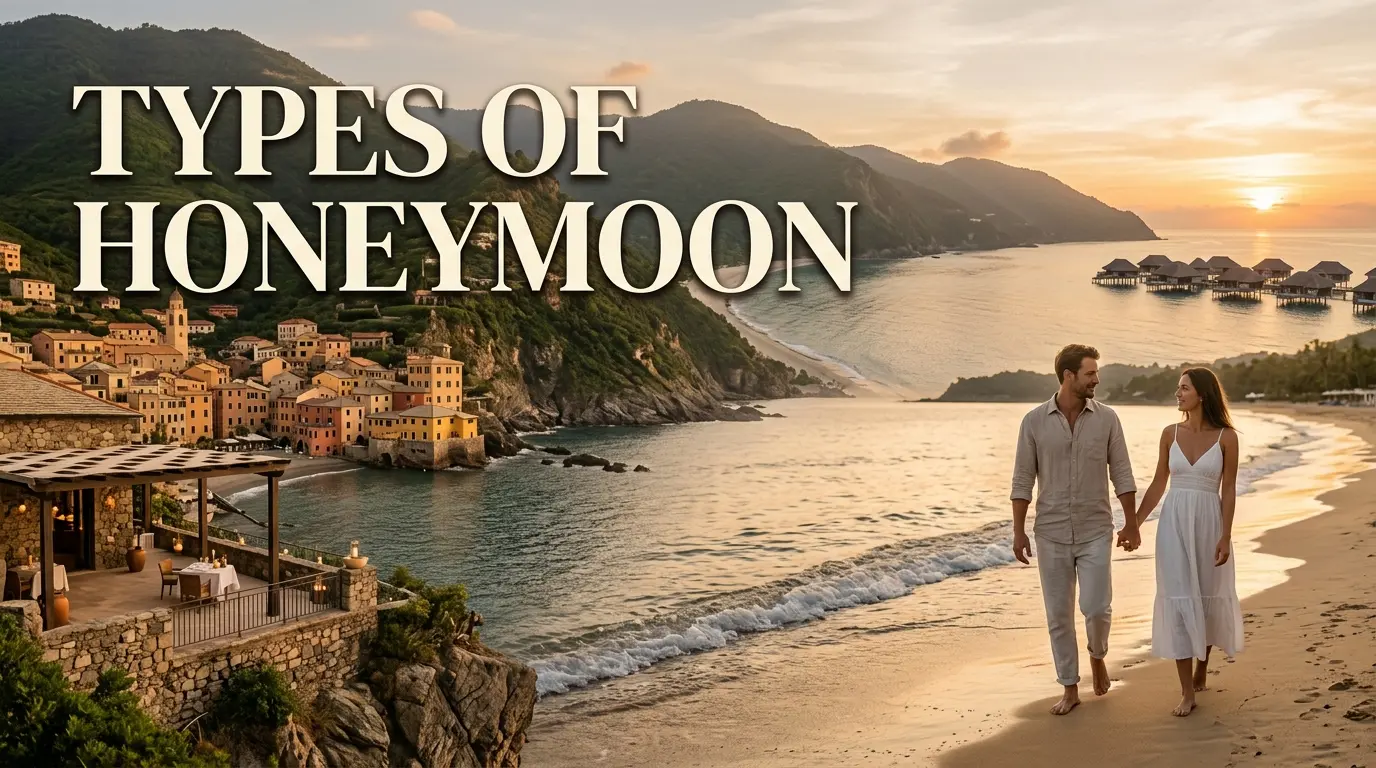
The right type usually comes from your calendar and cash, not Instagram.
- Traditional honeymoon: Leave within days, usually for about a week. Best when you can take leave straight away.
- Mini-moon: A short trip right after the wedding, followed by a bigger trip later. The Knot reports 24% of couples planned one in 2024, double the 2022 share.
- Latermoon: The longer trip taken months later, often timed for season or price.
- Earlymoon: A break taken before the wedding, once venue and vendors are locked in.
- Familymoon: Children or family join, which suits second marriages and blended families.
- Staycation: A hotel or retreat near home. It is the lowest-cost way to protect the private time.
- All-inclusive: One price, minimal planning. Useful when you are too tired to compare restaurants.
What a Honeymoon Is Actually For
The purpose changes with the couple, and that is where most guides stay vague.
In arranged marriages, the time often works as the first real chance to know each other. For couples who lived together for years, it works more as a marker that your status has changed. Psych Central describes it as time to calm down, reflect and absorb that change.
For couples who found the wedding stressful, it is simply recovery. We have seen couples spend the first two days of a trip asleep, and that was the right use of it.
The Trip Is Not the "Honeymoon Phase"
People mix these up, and it costs clarity. The honeymoon phase is the early period of intense affection in a relationship. It is not caused by the trip.
Marriage.com cites research suggesting this stage rarely lasts beyond about two and a half years for the average couple. A beautiful trip will not extend it. Small habits might: regular date nights, shared new activities and physical affection.
So plan the trip for rest and memory, not as a guarantee about your marriage.
Right Away or Later? A Decision Rule
Psych Central argues the honeymoon should happen within days, because it marks the transition. The Knot's data shows most couples now wait. Both views are workable.
Use this rule: go early if you are exhausted, go later if you are broke or overbooked. If you wait, protect at least two quiet days at home first, with phones off and no visitors.
The Knot's advisers also note that many travel companies still offer honeymoon perks within a year of the wedding. Ask when you book, and keep your marriage certificate or date handy.
Cost, Registries and Hidden Expenses

Psych Central put the average honeymoon at around $4,500, but that number is old, so check current figures before budgeting. Marriage.com notes that couples traditionally pay, while some use honeymoon registries so guests fund activities.
Costs people forget:
- Paperwork: Your passport name must match your ticket. Name changes after marriage can cause trouble if documents are out of sync.
- Insurance: Travel cover that includes cancellation, since wedding costs may leave little buffer.
- Health prep: Vaccinations or medications may need weeks of lead time.
- Cash flow: Wedding bills often land right when the trip is due.
- Rest buffer: An extra night at either end so you are not flying the morning after the reception.
Mistakes That Spoil Honeymoons
Psych Central tells the story of a couple who got rain on six of seven days. What hurt was not the weather but their rigid expectations.
Here is what we see go wrong most often:
- Overpacked itinerary: Three activities a day leaves no time to talk.
- Same-night travel: Boarding a flight hours after the reception.
- Single-plan thinking: No indoor option when the weather turns.
- Spending as proof: Treating cost as a measure of love.
Quick Planning Checklist
- Agree the purpose: Rest, adventure or both.
- Set the budget: Include insurance and the buffer nights.
- Choose the timing: Use the decision rule above.
- Check documents: Passport, visas and name matches.
- Book flexible: Choose refundable or changeable options where possible.
- Protect the time: Agree a no-work, no-visitors rule.
Frequently Asked Questions
Is a honeymoon necessary?
No. It is a tradition, not a legal or social requirement. A small, private break can do the same job.
Can a honeymoon happen at home?
Yes. A staycation works if you really switch off: phones silent, food delivered and a clear "no guests" boundary.
How early should I book a honeymoon?
Popular destinations and peak seasons book up, so many planners suggest several months ahead. Book earlier if you want a specific resort or travel dates.
Does a honeymoon have to be abroad?
Not at all. Domestic cabins, hill stations and coastal towns suit couples with limited leave or visa hurdles.
Do I need my marriage certificate when travelling?
Usually not for ordinary trips, but keep a copy if your passport name has changed or you want honeymoon perks that ask for proof of the wedding date.
Can friends or family come on the honeymoon?
Yes, if that is what you both want. A familymoon is a recognised option, especially for blended families.
What if the trip does not go to plan?
Treat it as part of the story. Have one indoor plan, one slow day and flexible bookings, so a delay or bad weather does not take over the trip.
Alliance Editorial Team
Our in-house team of wedding writers and editors.