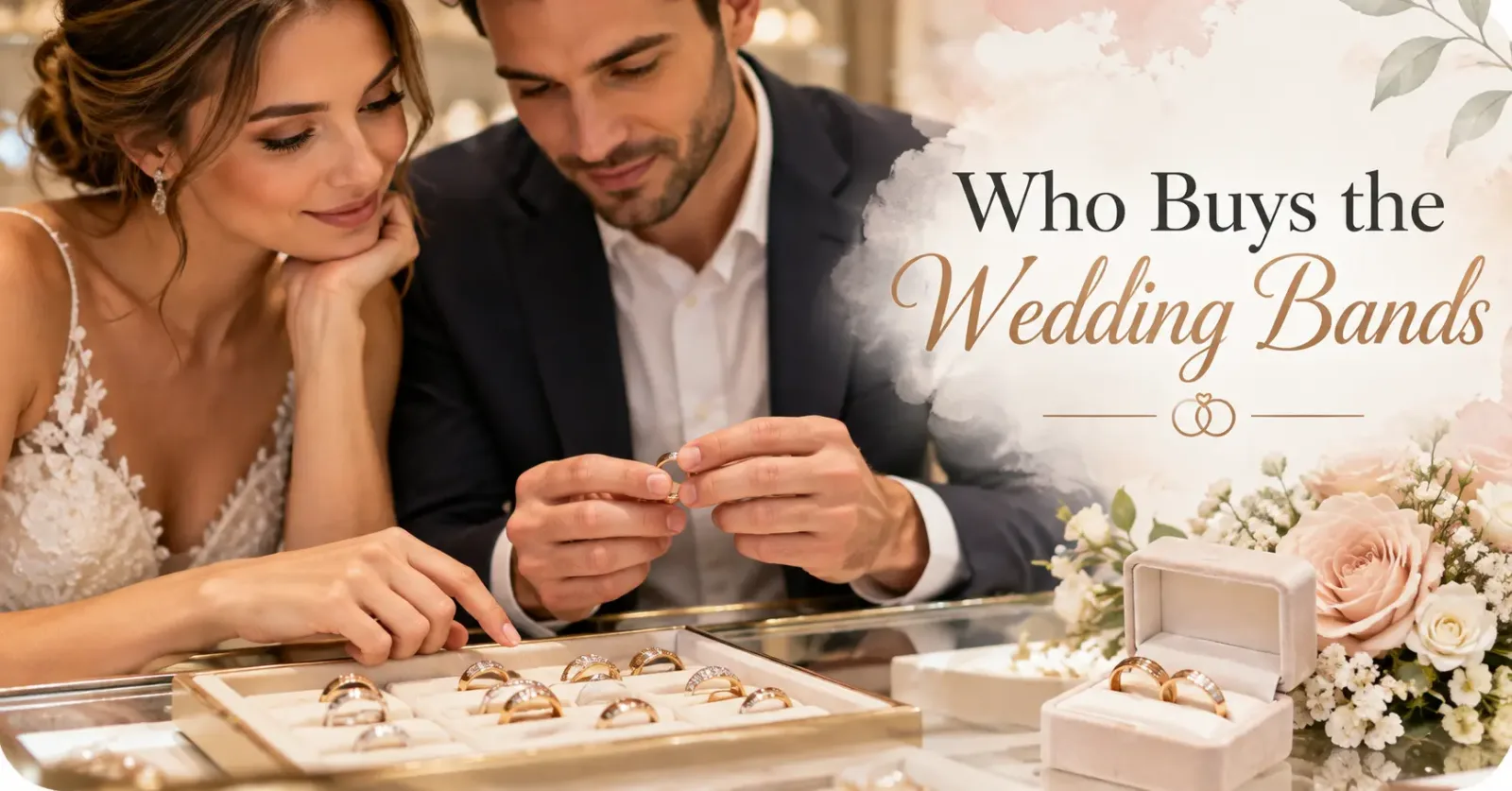
Traditionally, the bride or her family buys the groom's wedding band, while the groom or his family pays for the bride's. Today, though, there is no strict rule. Many couples buy each other's rings, split the total, or each pay for their own band. The best choice is whichever fits your budget, values, and family traditions.
Who Traditionally Pays for Wedding Bands?
If you grew up hearing that "the groom buys the ring," you are mostly thinking of the engagement ring. Wedding bands follow a different, more balanced old custom: each side of the couple gives a band to the other. The groom (or his family) chose and paid for the bride's band, and the bride (or her family) did the same for the groom's.
The idea behind it is simple. A wedding band is a promise given by one person to another, so it made sense for it to be a gift rather than something you buy for yourself. Exchanging bands in front of family and friends turns that gift into a shared, public vow.
Things have shifted a lot since then. Couples marry later, often pay for the wedding themselves, and share finances long before the ceremony. As a result, the old "who owes whom" question has turned into "what feels right for us?"
|
Wedding Band |
Traditional Buyer |
|---|---|
|
Bride's wedding band |
Groom or his family |
|
Groom's wedding band |
Bride or her family |
|
Both wedding bands today |
Decided by the couple |
Who Buys the Groom's Wedding Ring?
By tradition, the bride or her family buys the groom's band. Some brides still love this. Choosing his ring in secret, or having something engraved inside it, can feel like a personal first gift as spouses.
But it is not an obligation. Here are the common questions:
- Is the bride expected to buy it? Not anymore. It is a nice custom, not a rule. If she would rather not, or the budget is tight, nobody should be offended.
- Can the groom buy his own band? Absolutely. Many grooms prefer to choose the metal, width, and finish themselves, especially for something they will wear every day for decades. Some couples compromise: he picks the ring, she pays for it, or the reverse.
- Can the groom's family pay? Yes, if they offer and everyone is comfortable. Some families give a ring as a heirloom-style gift or contribute toward the cost as a wedding present. The key is that it is offered freely, not expected.
A small practical tip: his band is often the easiest one to buy together because it is usually simpler in design and quicker to size.
Who Buys the Bride's Wedding Ring?
Traditionally, the groom or his family pays for the bride's band. If he also bought her engagement ring, he may have been thinking about how the two rings would sit together, since many brides wear them as a pair.
You may also be wondering:
- Can the bride pay for her own band? Yes. Plenty of brides want to choose a particular style, or simply prefer to spend their own money on something they will wear forever.
- Does the groom buy both the engagement ring and the wedding band? Traditionally, yes, but it is increasingly common for the two to be treated as separate purchases. He may buy the engagement ring and the bride's band; or the couple may treat the wedding band as a joint purchase, especially if the engagement ring was a big expense.
One thing worth checking before you buy: if the engagement ring has an unusual shape or a tall setting, the band may need to be curved or contoured to fit next to it. Trying both on together saves expensive surprises.
How Do Modern Couples Pay for Wedding Bands?

Most modern couples do not follow a single script. They simply choose whatever feels fair. Do couples buy wedding rings together? Very often, yes. Shopping together means both partners are happy with the result, and sizing is easier. Here are the most common arrangements, with examples.
Each Partner Buys the Other's Ring
This is the classic exchange kept alive. You each choose and pay for the other's band, usually within an agreed budget so nobody feels awkward.
Example: Sara and Ali agree on a limit for each ring. They shop separately, keep the choices secret, and swap them at the ceremony.
Couples Split the Total Cost Equally
You add up both bands and each pay half. This works well when the rings differ a lot in price, because no one feels they are paying for a more expensive gift.
Example: A platinum band for her and a plain gold band for him cost very different amounts. Splitting the total means neither partner ends up covering more.
One Partner Pays for Both Wedding Bands
Sometimes one partner offers to pay for both, perhaps because they earn more, or because the other is paying for a different part of the wedding.
Example: Hira is covering the venue deposit, so Omar pays for both bands. It balances out without any formal accounting.
Each Partner Buys Their Own Wedding Band
This is simple, practical, and increasingly popular. Each of you chooses your own ring and pays for it, which avoids guesswork and keeps your finances independent.
Example: Two partners with very different tastes (one loves a diamond-set band, the other wants plain titanium) each buy what they want, so nobody compromises on style or budget.
Couples Share Costs Based on Their Income
Instead of a 50/50 split, some couples divide costs in proportion to what each earns. It can feel fairer when there is a big gap in income.
Example: If one partner earns roughly twice as much as the other, they might pay about two-thirds of the total while the other pays one-third. The exact split matters less than both of you feeling good about it.
If you are not sure which approach suits you, think about which one would leave neither of you with a tiny, lingering resentment. That is usually the right one.
Who Buys Wedding Bands in Different Cultures?
Exchanging wedding bands is not universal, and when it happens (and who pays) can differ a lot. Here are some general patterns, though family customs vary widely even within one country.
American and Western Wedding Traditions
In the US and much of the Western world, rings are exchanged during the ceremony. The groom has traditionally bought the engagement ring and the bride's band, while the bride's side gave him his. Today, many couples simply decide together.
European Wedding Ring Customs
In some European countries, couples commonly buy a matching pair of bands together, and the rings may be worn on a different hand than in the US. In some places the engagement ring and wedding band are less distinct, and in some Orthodox Christian traditions rings are exchanged at a betrothal rather than the wedding itself.
Cultural and Family Traditions That Affect Ring Purchases
In many South Asian and Middle Eastern families, rings are exchanged at an engagement ceremony and gold is a significant part of gifts between families. In some communities, the groom's family provides jewelry for the bride, while in others the cost is shared or handled very differently. Some faiths and cultures do not use rings at all, or exchange them in other ways.
The takeaway is that "who buys the ring" depends on where you are and who your family is. If your relatives expect a particular custom, it helps to talk about it early, kindly, and openly.
Wedding Band vs. Engagement Ring: Who Pays for Each?
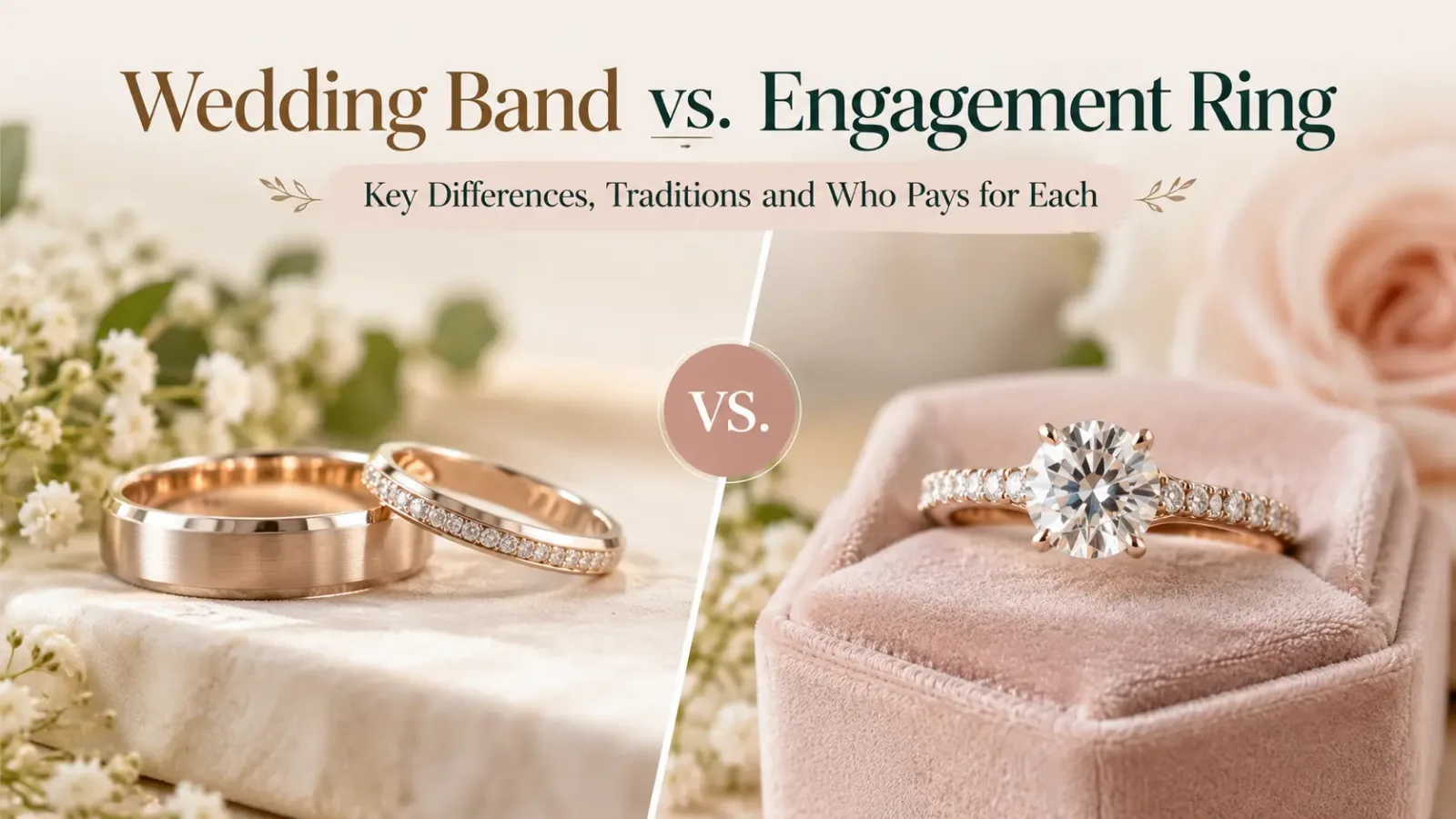
People often mix these two up, so here is a quick comparison. If you are wondering who pays for the engagement ring, the traditional answer is the person proposing. The wedding band, on the other hand, has often been a gift from the other partner or a shared purchase.
|
Factor |
Engagement Ring |
Wedding Band |
|---|---|---|
|
Traditional buyer |
Groom/proposer |
Often the other partner |
|
Given when |
Usually during proposal |
Usually during wedding ceremony |
|
Modern payment |
Proposer or shared |
Individual or shared |
A useful way to look at it is that the engagement ring is a question ("will you?") and the wedding band is the answer you wear daily. That is partly why modern couples feel free to pay for them differently.
How Much Should Couples Budget for Wedding Bands?
There is no magic number, and you should be wary of anyone who offers one. A better approach is to look at what drives the price and decide what matters most to you.
Price factors to consider:
- Metal: Gold (in different colors and purities) and platinum are classic choices. Platinum is generally more expensive than gold. Titanium, tungsten, and other alternative metals are usually more affordable and hard-wearing, although some can be difficult to resize.
- Plain vs. diamond bands: A plain band is usually the cheapest. Adding diamonds or gemstones raises the cost, depending on the number and quality of stones.
- Width and weight: A wider or heavier band uses more metal, which adds to the price.
- Extras: Engraving, resizing, custom designs, and finishes can add to the final bill, so ask about them upfront.
- Lifestyle: If you work with your hands or are very active, a durable, simpler band may be worth more than a delicate, costly one.
Instead of aiming for a set percentage of your wedding budget, choose a number you can pay comfortably without credit card debt or stress. A ring you love and can afford is a much better start than one that strains your finances.
How to Decide Who Should Buy the Wedding Bands
Still unsure how to split wedding ring costs? These steps make the conversation easy.
Set a Comfortable Budget Together
Talk about a total number (or a number per ring) before you look at anything. This avoids falling in love with something that is out of reach.
Discuss Expectations Before Shopping
Ask each other: "Do you want to be surprised, or choose together? Does tradition matter to you or to your family?" Honest answers now prevent awkwardness later.
Decide Whether to Shop Together or Separately
Shopping together makes sizing and style easier. Shopping separately keeps the surprise. You could also do a mix: choose the style together, then let one person handle the purchase.
Consider Family Contributions Without Pressure
If parents or relatives offer to help, you can accept gratefully, but it is fine to decline politely. Neither of you should feel obligated to follow an expectation you do not share.
Does It Matter Who Pays for the Wedding Bands?
Not really. What matters is what the rings represent: a promise you make to each other and wear every day. Whether tradition says the groom pays, the bride pays, or you each buy your own, the meaning stays the same. Personal choice carries more weight now than any fixed expectation. The most important thing is that you both agree, feel comfortable, and nobody feels pressured. A ring chosen with care and paid for fairly will mean far more than one bought simply because "that's how it's done."
Frequently Asked Questions
1. Does the bride pay for the groom's wedding ring?
Traditionally, yes, the bride or her family buys the groom's band. But this is a custom, not a requirement. Many couples buy their own, split the cost, or decide it another way.
2. Does the groom buy both wedding bands?
He can, but he does not have to. Traditionally he buys the bride's band only. Some grooms do cover both, and some couples simply share the cost.
3. Do couples usually buy wedding bands together?
Very commonly. Shopping together helps with sizing, style, and budget, and many couples enjoy choosing their rings as a team. Others prefer to keep a surprise.
4. Can you buy your own wedding ring?
Yes. Buying your own band is perfectly acceptable and increasingly popular, particularly for people who want full control over style and cost.
5. Do parents traditionally pay for wedding bands?
In some families, yes, parents contribute or give a ring as a gift. It is not universal, and it should always be offered freely rather than expected.
6. When should you buy wedding bands before the wedding?
A good rule is to start a few months ahead. This leaves time for sizing, engraving, and any custom work, which can take several weeks. If you want a custom design, begin even earlier.
7. Who keeps the wedding bands before the ceremony?
The couple usually keeps their own rings safe until the wedding. On the day, the rings are often handed to the best man, maid of honor, or ring bearer, who brings them to the ceremony. Whoever holds them, double-check them before you leave for the venue.
Must Visit to Related Pages:

Alliance Editorial Team
Our in-house team of wedding writers and editors.