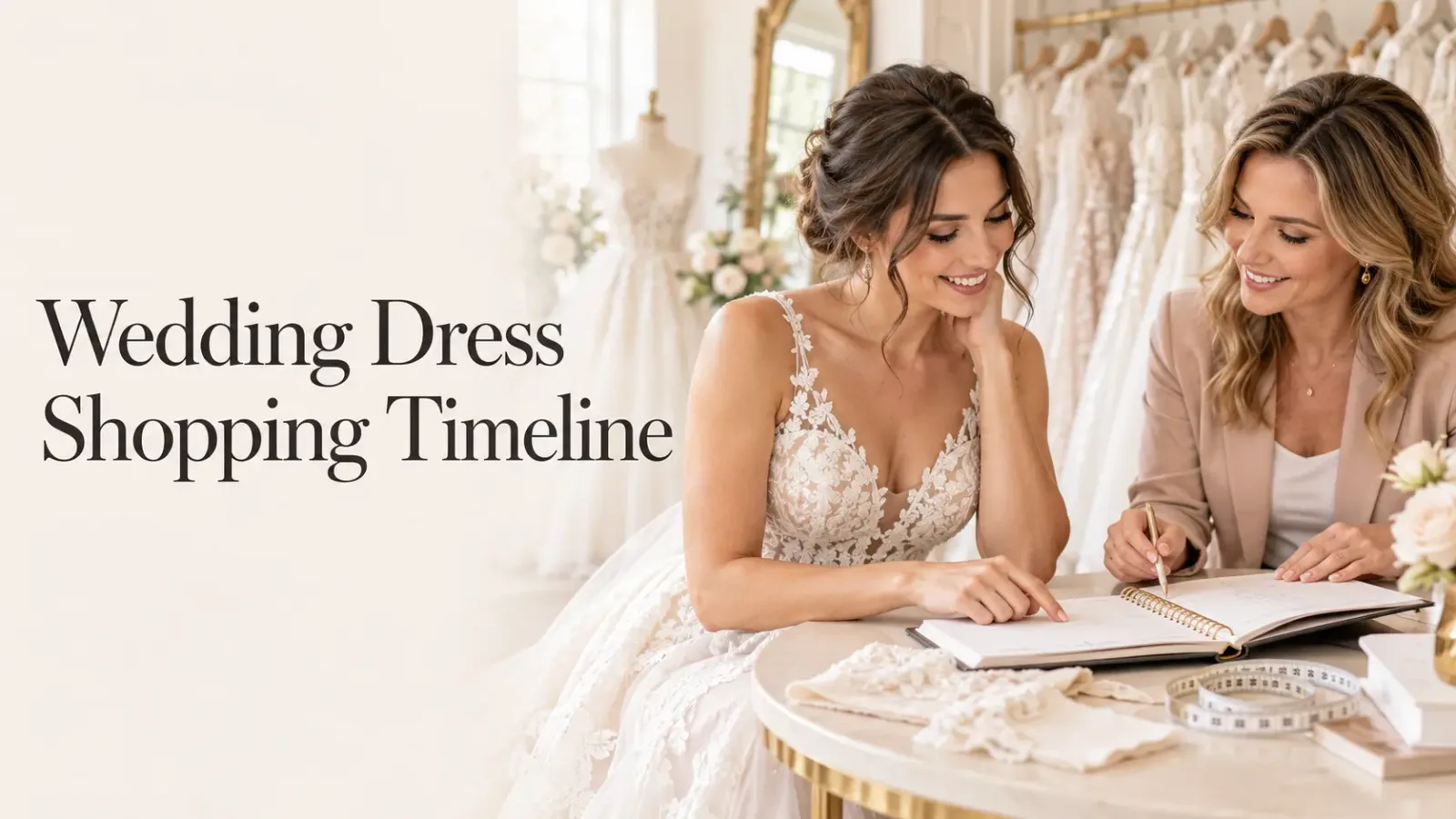
How far in advance should you buy a wedding dress? Start researching 12–18 months before the wedding, order your gown 9–12 months ahead, and book 8–12 weeks for alterations. Made-to-order dresses usually take about 4–8 months to be produced and delivered, so confirm the designer's delivery date in writing before you pay a deposit.
Getting married in under six months? Skip to the short engagement section. Ready-to-wear, sample and rush-order dresses can still work if you move quickly.
These windows follow Kleinfeld's published buying and fitting guidance. Always adjust them to your designer's confirmed delivery schedule and your fitter's availability.
Wedding Dress Timeline Checklist at a Glance
Use this wedding dress timeline checklist to track decisions, not just appointments. Each stage should leave something settled before the next begins.
| Timing | Stage | What to have ready before moving on |
|---|---|---|
| 12–18 months before | Research | A realistic gown budget and a short list of practical requirements |
| 12 months before | Bridal appointments | Comparable notes on fit, construction, comfort and price |
| 9–12 months before | Order placement | An accurate order sheet and written production and delivery dates |
| Production (about 4–8 months) | Waiting period | An agreed update date and a booked alterations specialist |
| 8–12 weeks before | First fitting | A written scope of work and an itemized estimate |
| 2–4 weeks before | Final fitting | Approved fit and dressing instructions for your helper |
| Last 1–2 weeks | Collection | The gown, every detachable piece and care instructions |
12–18 Months Before: Research Styles and Set Your Budget

This is the best time to start wedding dress shopping, even if you are only browsing.
Start with your venue and day plan
A ceremony on grass, a narrow staircase or an evening of dancing gives you better selection criteria than a folder of fifty unrelated dresses. Save a small set of inspiration images and label the detail you like in each: a square neckline, a light skirt, covered shoulders or a clean waistline.
Work out your gown budget
Your dress budget is not your total clothing budget. Use this formula:
Total outfit budget − alterations − accessories − tax and delivery − 10% contingency = your gown ceiling.
Get estimates for the other items first, then shop within what is left. Also decide which compromises you accept. A different fabric may be fine; an uncomfortable neckline probably is not.
12 Months Before: Book Your Bridal Appointments
Contact each boutique with your wedding date, gown budget and preferred styles. Ask about sample sizes and order sizes separately, because they are different questions.
Also check appointment length, guest limits, accessibility, booking fees and cancellation terms. Leave a few days between visits so you can compare impressions, and invite people who explain their opinions without turning every try-on into a vote.
What to bring to your first bridal appointment
- Inspiration: a handful of reference images with a note on each.
- Budget: your gown-only limit, stated clearly to the stylist.
- Event details: venue photos and any ceremony clothing requirements.
- Undergarments: whatever the boutique recommends for try-ons.
- Questions: concerns about comfort, coverage or movement.
After each visit, record the designer, style number, color, quoted price and what you liked or disliked. With permission, photograph each dress from the front, side and back so you compare like with like.
9–12 Months Before: Choose and Order Your Wedding Dress
At the ordering appointment, slow down and check the paperwork against the dress you chose. Similar style names, different lining shades and optional sleeves can turn a small clerical error into a big problem.
Ask whether the gown uses the designer's standard size chart, a made-to-measure service or a bespoke process. "Made-to-order" does not automatically mean a custom fit.
Order review checklist
- Identification: designer, style number, fabric and color.
- Sizing: recorded measurements, chosen size and the consultant's reasoning.
- Modifications: every approved change with its price and specification.
- Payment: deposit, balance and due dates.
- Documentation: a full copy of the signed agreement.
If your measurements fall between sizes, discuss the construction with the fitter. Do not order a smaller size based on an intended future body change.
Questions to ask before paying your deposit
- Order submission: when will the boutique send my order to the designer?
- Delivery estimate: does the date mean factory completion, dispatch or arrival at the salon?
- Changes: until when can I amend size, color or details?
- Alterations: who does them, and what does the quote include?
- Cancellation: what happens financially if I cancel or postpone?
- Delay procedure: who contacts me if the date changes?
Read the answers against the contract. Do not rely on a conversation you may remember differently months later.
How Long Does It Take to Order a Wedding Dress?
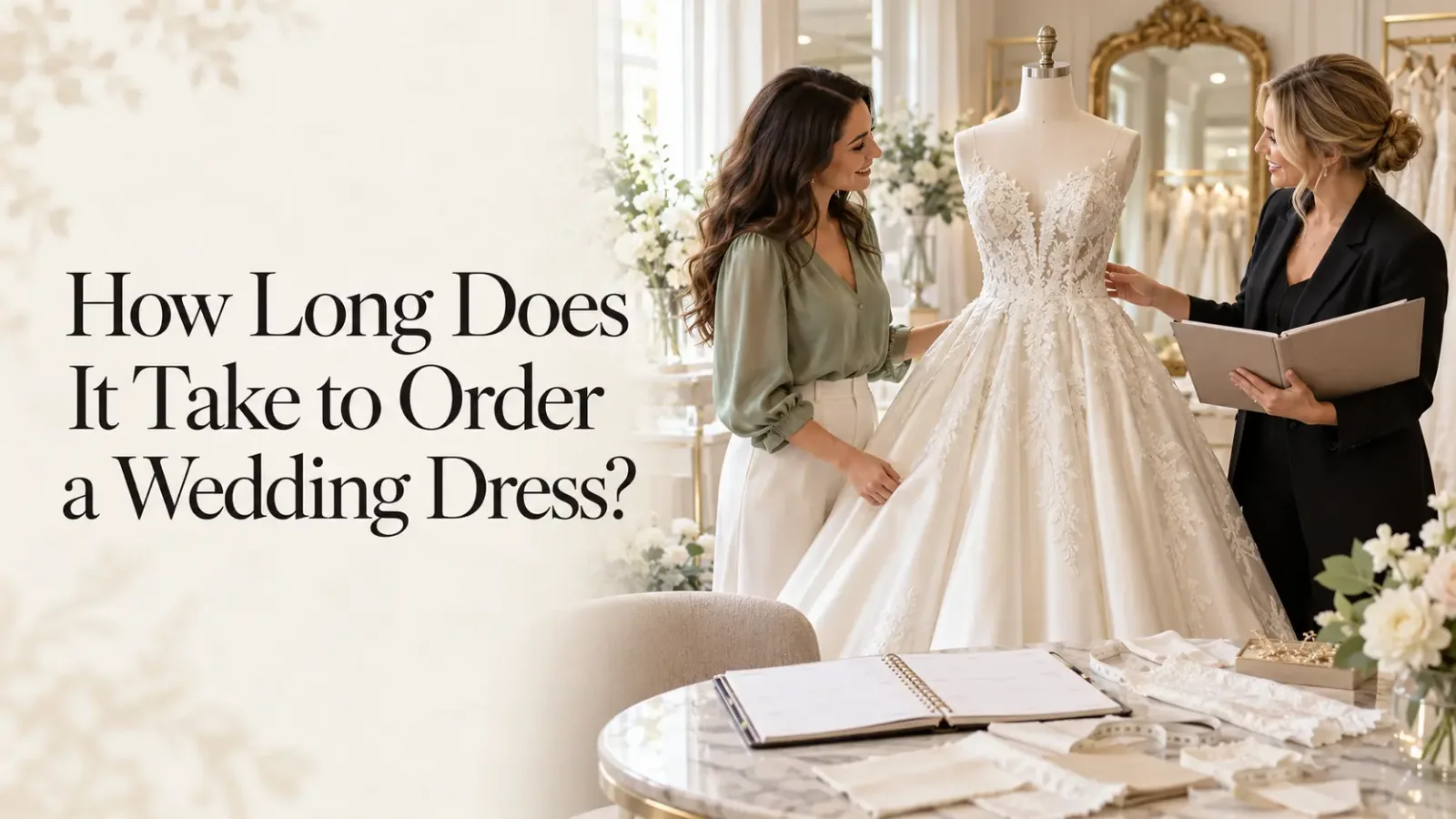
Most made-to-order wedding dresses take roughly 4–8 months from order to arrival at the boutique. Some designers are faster, and complex or custom pieces can take longer. Ask for the designer's confirmed timeline in writing rather than relying on a general estimate.
Confirm delivery and plan accessories while you wait
- Agree an update date with the boutique and put it in your calendar.
- Keep your order reference and a named contact together.
- Ask: "Has the designer confirmed the order, and is the expected salon arrival still the same?"
- Choose accessories around the gown's construction. Check whether a low back limits bra options, whether a belt hides the waist detail and whether a veil competes with the train.
- Contact your alterations specialist now to learn their booking lead times. Reserve availability, but do not fix appointments to a delivery date that is not confirmed.
When the gown arrives, inspect it against your order sheet before authorizing alterations. Photograph and report any discrepancy promptly, following the seller's procedure.
8–12 Weeks Before: Start Wedding Dress Alterations
Wedding dress alterations usually take 8–12 weeks from the first fitting to the finished gown. At the first fitting, ask the fitter to separate essential fit corrections from optional redesign work. That shows what you need to wear the dress comfortably and what you are adding by choice.
Focus on support, balance and movement. Describe any pulling or slipping in plain language instead of guessing which seam needs changing.
- Request an itemized estimate before work begins.
- Ask whether reshaping the bodice, adjusting straps, hemming multiple layers or adding a bustle are charged separately.
- Ask how many fittings to expect. Kleinfeld describes about three, but your fitter's plan for your dress is what counts.
What to bring to your wedding dress fittings
- Shoes and undergarments: bring the real ones to every fitting. Kleinfeld requires the wedding shoes for accurate hemming.
- Detachable pieces: overskirts, sleeves or removable straps.
- Previous notes: agreed changes and questions from the last visit.
- Second pair of shoes: if you will change footwear at the reception.
If your ceremony heels and reception flats differ a lot in height, ask the fitter to demonstrate the hem with both before any irreversible cutting.
The Final Weeks: Complete Fittings and Arrange Pickup
At the final fitting, test the finished gown through the movements your day requires. Sit, walk with a normal stride, turn, raise your arms and try a few dance steps.
Name anything uncomfortable while you are wearing it. "The top feels secure standing but presses when I sit" helps a fitter far more than "something feels wrong."
- Bring whoever will fasten the dress or secure the train so they can learn the steps. With permission, record a short demonstration.
- Confirm pressing arrangements and check the package includes every separate component.
- If someone else is collecting the gown, ask whether they need ID or written authorization.
Wedding Week: Store and Transport Your Dress
Follow the boutique's instructions for your fabric and construction. Ask whether the gown should hang from its internal support loops or lie supported another way, especially if it is heavily embellished.
At home, keep it in a clean, dry space away from pets, food, direct sunlight and frequent handling, in the packaging the salon recommends.
For travel, plan the dress's place in the car before loading luggage. If you are flying, check the airline's current baggage rules and do not assume the crew can hang it in a closet. Arrange any destination pressing with someone who handles bridal fabrics, and never experiment with direct heat or steam on delicate trim the night before.
Must Visit to Related Pages:
Wedding Dress Timeline for a Short Engagement (Under 6 Months)
If your wedding is less than six months away, start with availability. Change your first question from "Can I order this dress?" to "Can this exact gown be ready to wear by my deadline?" Think through the whole journey: getting the garment, receiving it, correcting the fit and collecting it. A fast purchase only solves the first step.
3–6 months: ask about rush-order wedding dresses
Ask the boutique to get designer approval for the exact style, size and changes before you accept a rush order. Kleinfeld says rush production is possible for some gowns depending on availability, not for every dress.
Keep the charges separate: a production rush fee, expedited shipping and urgent alteration fees are three different costs. Paying one does not mean the other stages are faster. If the designer's estimate leaves no workable time for alterations, choose another option.
Under 3 months: off-the-rack and ready-to-wear wedding dresses
Prioritize gowns that already exist and can be delivered quickly. Kleinfeld lists sample dresses, pre-owned dresses and off-the-rack salon options as alternatives for shorter schedules.
- Samples: inspect closures, underarms, lining, hem and embellishments before paying. Ask a qualified fitter whether major changes are realistic, since a larger dress cannot always be reduced successfully.
- Online purchases: verify physical stock, dispatch time and return conditions separately, and allow for the chance the dress does not work when tried on.
Book your alterations specialist the same week you choose a gown.
Wedding Dress Costs to Plan For
Budget for more than the sticker price. Costs vary widely by city, designer and boutique, so treat these as categories to quote, not fixed figures.
- Alterations: often several hundred dollars, and more for multiple layers, beading or major reshaping. Always get an itemized estimate.
- Rush fees: usually an added charge on top of the gown price. Ask for the exact amount in writing.
- Accessories: veil, shoes, undergarments, jewelry and belt.
- Extras: tax, delivery, pressing, preservation and a contingency for changes.
What Can Change Your Wedding Dress Timeline?
Add extra time to the parts of the plan that are still uncertain, instead of adding the same buffer to every stage.
- Custom design: ask how sketches, fabric approval and any trial garment affect the schedule.
- Complex construction: request an assessment before committing to major changes around beading, lace placement or internal support.
- Separate suppliers: allow for handover time if the boutique and alterations studio are different businesses.
- Limited availability: plan around work travel and the days you can really attend fittings.
- Earlier use: count backward from portraits or departure if either comes before the ceremony.
Example: your wedding is October 24, but travel starts October 17. Put October 17 on every supplier's paperwork as the departure date, then agree a ready-for-collection date earlier than that. Keep the actual wedding date accurate. Explain the real deadline instead of giving a false one.
Wedding Dress Shopping Timeline Mistakes to Avoid
- Endless comparisons: stop booking new appointments once you have a gown that meets your criteria.
- Assumed reservations: ask whether a sample or slot is actually held, and until when.
- Unrecorded decisions: send a short written recap after agreeing any significant change.
- Unclear ownership: know who handles each next step. The stylist, designer and fitter rarely share one schedule.
- Unnecessary redesign: question late aesthetic changes that add work without fixing a real problem.
- Calendar gaps: note the next action after every visit so open questions do not vanish for weeks.
Frequently Asked Questions
How far in advance should you buy a wedding dress?
Order 9–12 months before the wedding, and start researching 12–18 months ahead so you can compare styles and boutiques.
How long does it take to order a wedding dress?
Most made-to-order gowns take about 4–8 months to be produced and delivered. Get the designer's confirmed date in writing.
How long do wedding dress alterations take?
Plan for 8–12 weeks. Many brides need about three fittings, but complex gowns may need more.
Can you buy a wedding dress in 3 months?
Yes, but choices are limited. Look at off-the-rack, sample, pre-owned or approved rush-order gowns, and book your fitter immediately.
Can I go wedding dress shopping before getting engaged?
Yes. Tell the boutique you are exploring styles without a date, check its appointment policy and fees, and treat the visit as research.
Should I wait for a trunk show to choose my dress?
Only if the visiting collection has something you specifically want to try and the timing fits. Ask which samples will attend, whether appointments are required and whether offers have exclusions.
Can I shop for my wedding dress alone?
Yes. A solo appointment works well if fewer opinions make deciding easier. Photograph your finalists, then seek a second opinion afterwards if you want one.
What if the wedding is postponed after I order my gown?
Tell the boutique straight away and ask whether the original payment and production schedule still apply. Get storage arrangements, charges and collection terms in writing.
Can I have alterations done at a different bridal salon?
Often yes, but it depends on the studio. Contact it before moving the gown, share photos and the work needed, and confirm consultation fees and any restrictions on unfinished work.
Should I cancel my fitting if my period starts?
Not automatically. Call your fitter and describe what feels different, since temporary bloating can change how the dress fits. They can advise whether measurement-sensitive work should wait.
What if I no longer like my dress after ordering?
First work out what changed: the gown, your plans, or the effect of looking at more dresses. Arrange another try-on if possible and review your order terms before paying for changes or a replacement.
Must Visit to Related Pages:

Alliance Editorial Team
Our in-house team of wedding writers and editors.